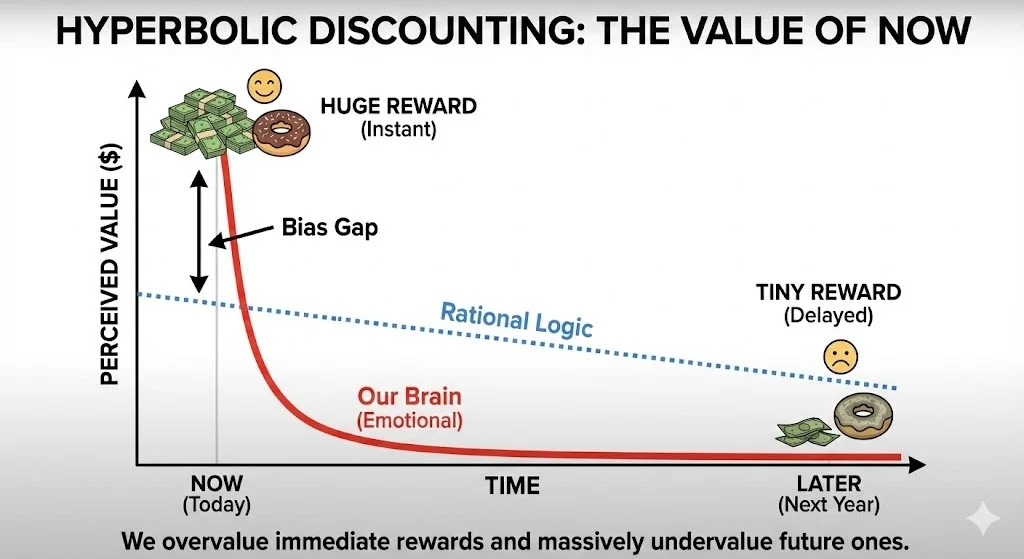
Hyperbolic Discounting: Why Users Quit Before They See the Value

The “Future Self” is a Stranger Neurologically, when you think about your “Future Self” (e.g., You in 5 years), your brain lights up in the same area as when you think about a complete stranger. We don’t empathize with our future selves. This is why we procrastinate. Present Self: “I don’t want to do the dishes. I want to watch TV.” Future Self: “I will have to do the dishes tomorrow.” ...
February 11, 2026

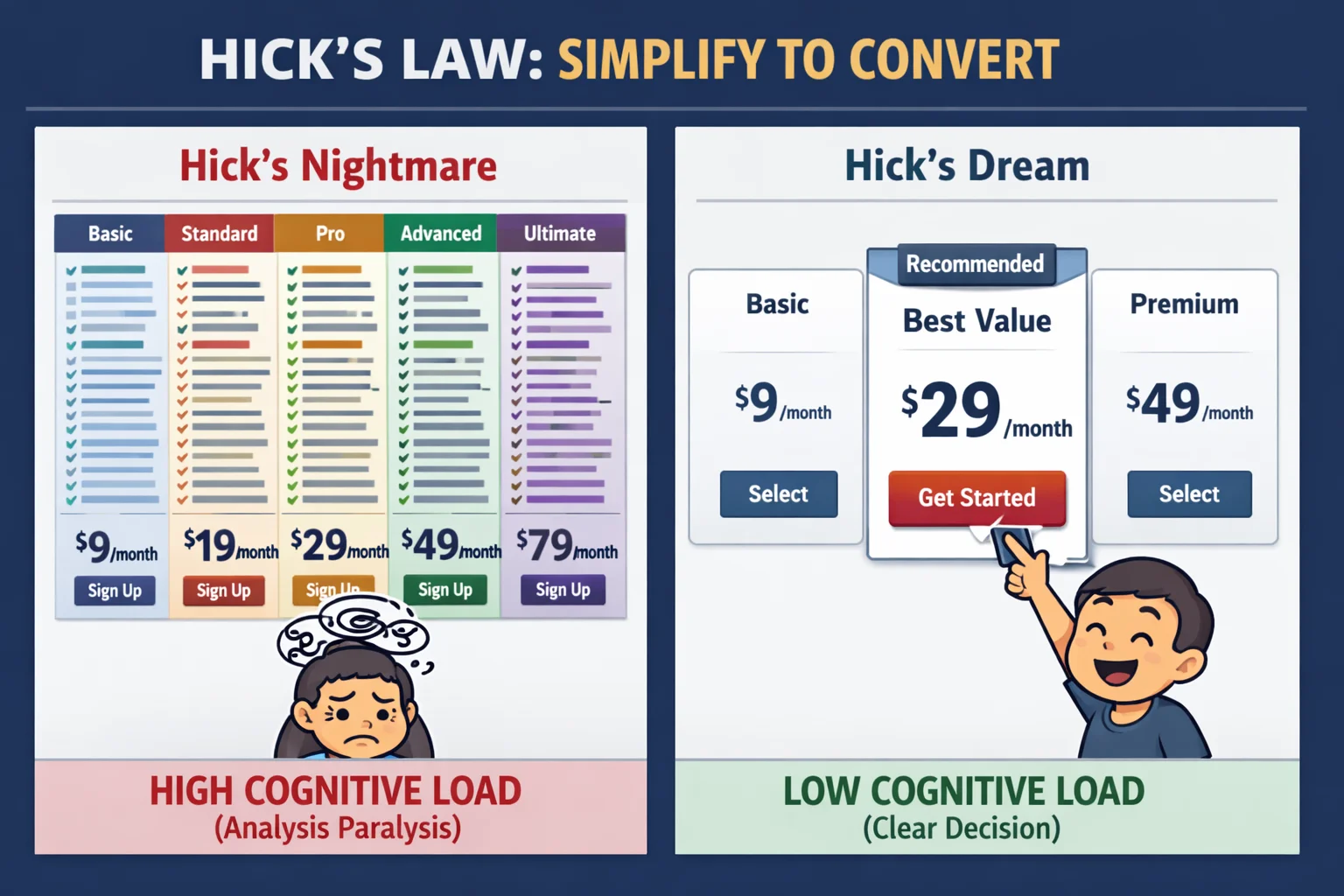
The Tyranny of Choice: How "Hick’s Law" is Killing Your Conversions

The Cognitive Load Problem Imagine walking into a restaurant, starving. They hand you a 50-page menu with no pictures. Do you feel liberated? No. You feel stressed. You scan it anxiously, terrified of picking the wrong thing, and eventually just order a burger because it’s safe. Now imagine a restaurant with a menu that has just three items: Steak, Fish, or Vegetarian. You decide in 10 seconds and feel confident. ...

February 11, 2026

The Zeigarnik Effect: Why 99% Complete is More Powerful Than 100%

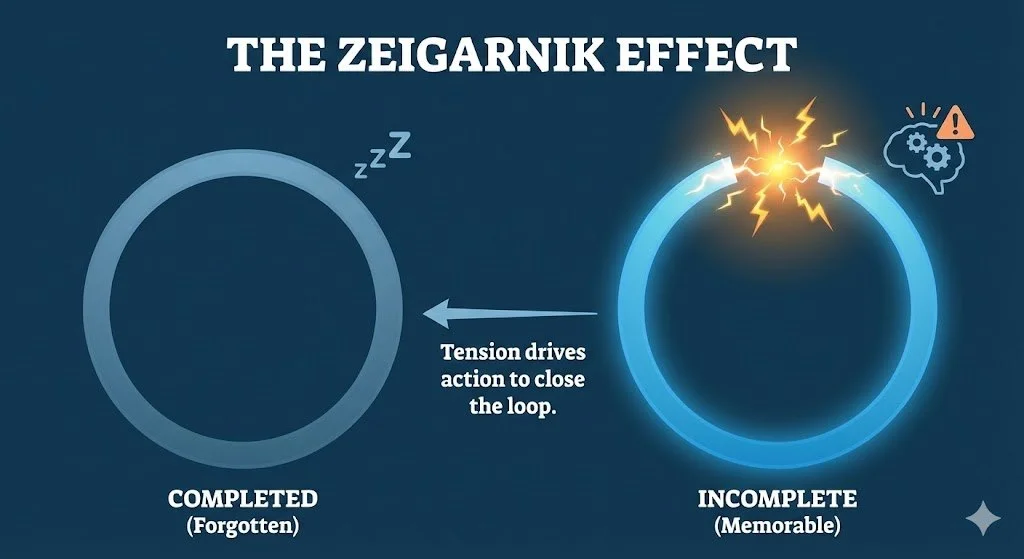
The Psychology of the “Cliffhanger” Bluma Zeigarnik proved that people remember uncompleted or interrupted tasks 90% better than completed ones. This is why you remember the one bug you couldn’t fix on Friday afternoon all weekend, but you forget the 10 bugs you fixed on Monday. The “Open Loop” creates a state of mild anxiety. The only way to relieve the anxiety is to return and finish the task. How to Weaponize This in Product Design 1. The “Almost Done” Progress Bar (LinkedIn) LinkedIn is the master of this. For years, users saw a “Profile Strength” meter. It would get stuck at “Intermediate.” Users would spend hours endorsing strangers and adding obscure skills just to get that bar to “All-Star.” The Trick: If they showed no bar, nobody would care. By showing a partial bar, they created a Zeigarnik itch. ...

February 11, 2026

The $300 Million Button: Why Friction is the Enemy of Revenue

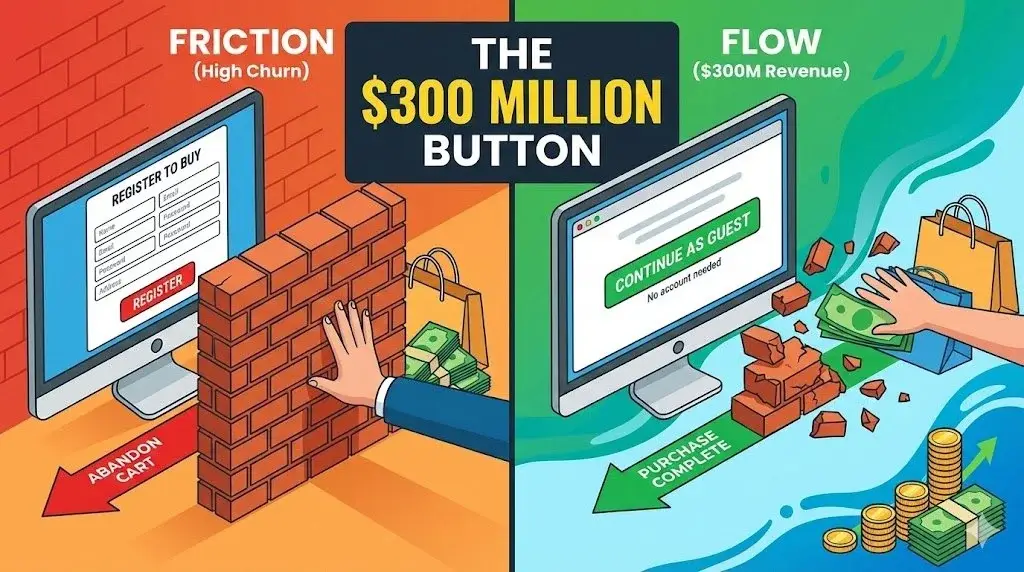
The “Greedy Marketer” Trap As Product Managers, we are data-greedy. We want the user’s email. We want their phone number. We want them to create a profile so we can send them newsletters and retarget them with ads. We convince ourselves that “Registration” is good for the user. “It’s for their security!” we say. But to a user, a “Register” form represents Work and Commitment. Work: I have to think of a password. I have to verify my email. ...

January 17, 2026

The Hook Model: How to Manufacture Habits (and Why Slot Machines are Addictive)

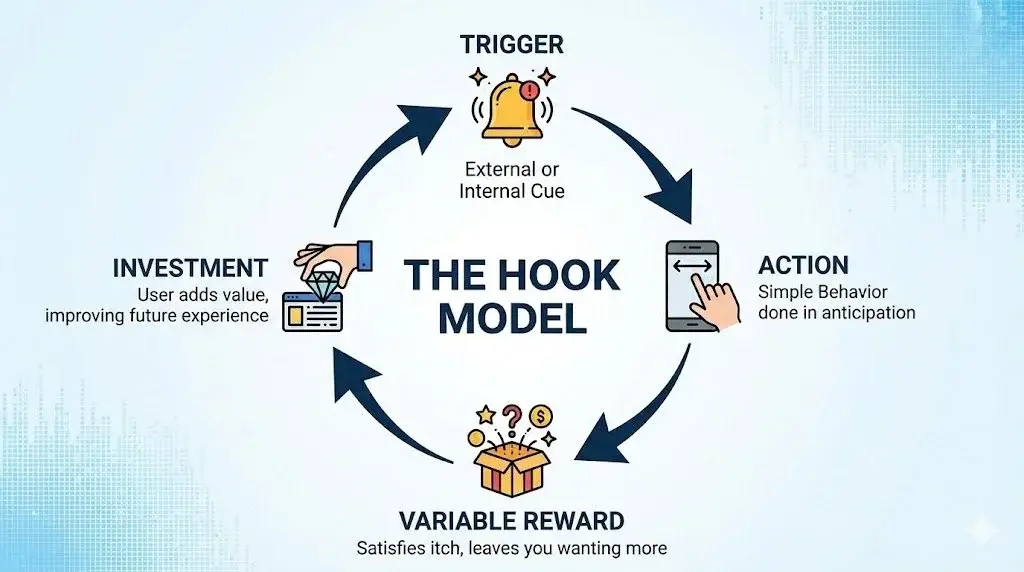
The 4-Step Loop Why do some products flop while others become obsessions? It’s not just “value.” It’s the delivery mechanism. The Hook Model explains the cycle that turns a conscious choice into an automatic behavior.1 1. The Trigger (The Cue) Every habit starts with a spark. External Triggers: Emails, push notifications, icons with red badges.2 These are training wheels. Internal Triggers: This is the goal. You want the user’s emotions to trigger the app. ...

January 17, 2026

The Peak-End Rule: Why Users Ignore the Average and Remember the Finale

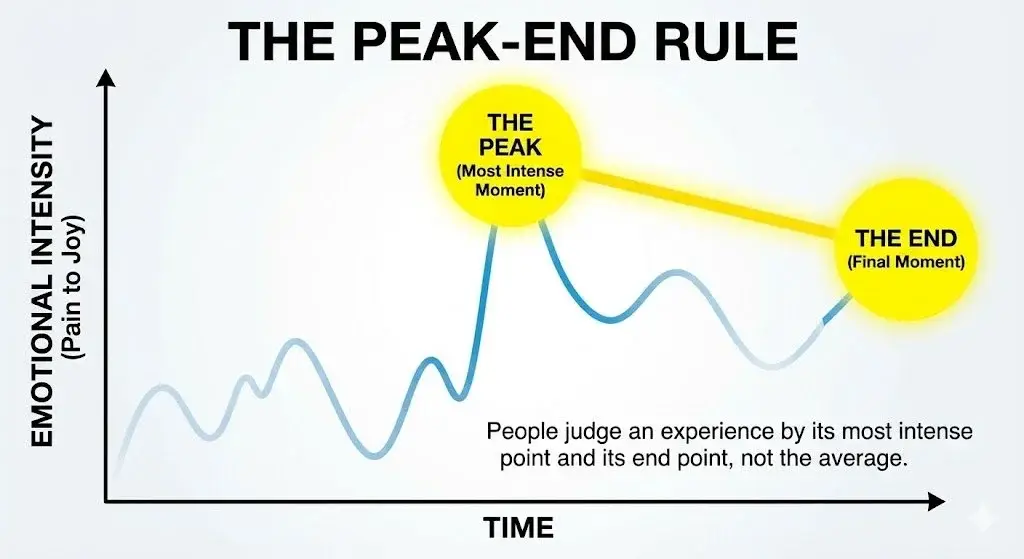
The Two Selves Daniel Kahneman argues that we have two selves: The Experiencing Self: Lives in the moment. Feels every second of frustration or joy. The Remembering Self: Keeps the score. The Remembering Self is a tyrant. It deletes 99% of the experience and only keeps the highlights. Specifically, it keeps the Peak (the highest emotional point) and the End. If you have a 5-star dinner but the waiter is rude when bringing the bill (The End), you will remember the dinner as “terrible.” ...

January 12, 2026

The Broken Windows Theory: How "Visual Debt" Rots Your Product Culture

The 1969 Experiment In 1969, Stanford psychologist Philip Zimbardo parked a car in a rough neighborhood in the Bronx and left the hood open. Within 10 minutes, it was stripped for parts. Then, he parked a pristine car in a wealthy neighborhood in Palo Alto. It sat untouched for a week. **Then, Zimbardo took a hammer and smashed one window of the Palo Alto car.**Within hours, the wealthy neighbors tore the car apart. ...

January 8, 2026

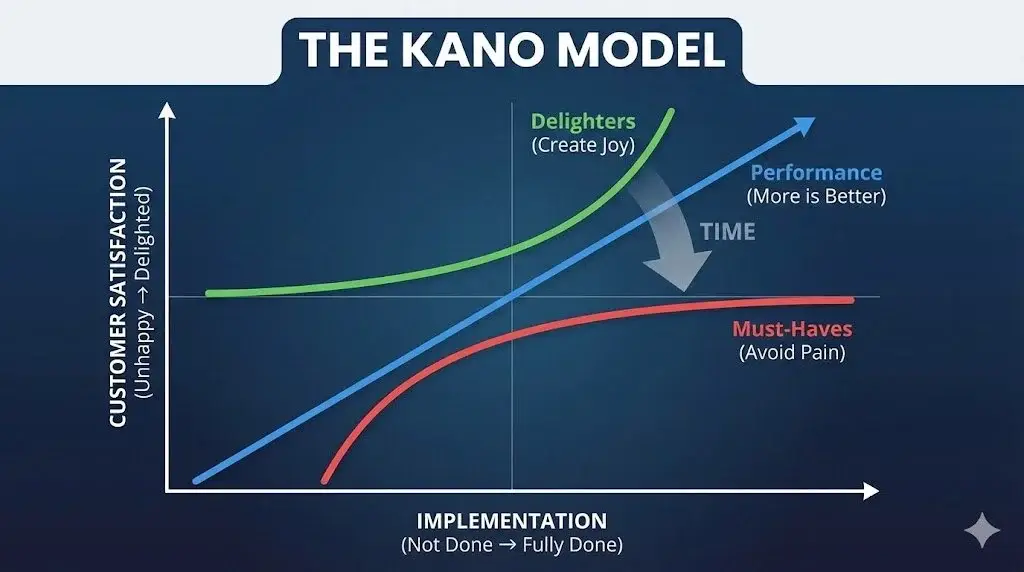
The Kano Model: Why Features "Expire" and How to Stay Ahead

The Gravity of Expectations Product Management would be easy if customer expectations stayed static. But they don’t. Customer satisfaction is a Hedonic Treadmill. The moment you ship a revolutionary feature, the clock starts ticking. Competitors copy it. Users get used to it. The magic fades. To understand this lifecycle, we use the Kano Model. The 3 Categories of Features 1. The Basics (Must-Haves) Definition: These are non-negotiable. The Trap: You get Zero Credit for doing them well. ...

January 7, 2026

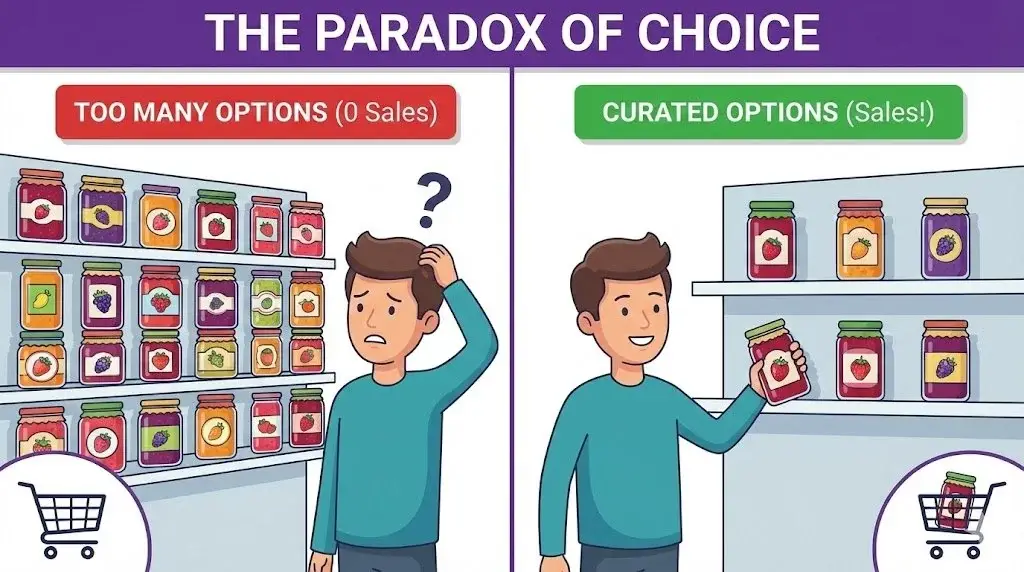
The Jam Experiment: Why Offering Less Options Drives More Revenue

The Paralysis of Abundance We live in a world of abundance. Walk down the cereal aisle, and you face 50 options. Open Netflix, and you have 5,000 movies. Logic suggests that more options increase the likelihood of finding the “perfect fit.” Psychology proves the opposite: More options increase anxiety. Barry Schwartz, author of The Paradox of Choice, argues that as options increase, two things happen: Analysis Paralysis: It becomes harder to choose. ...

January 4, 2026

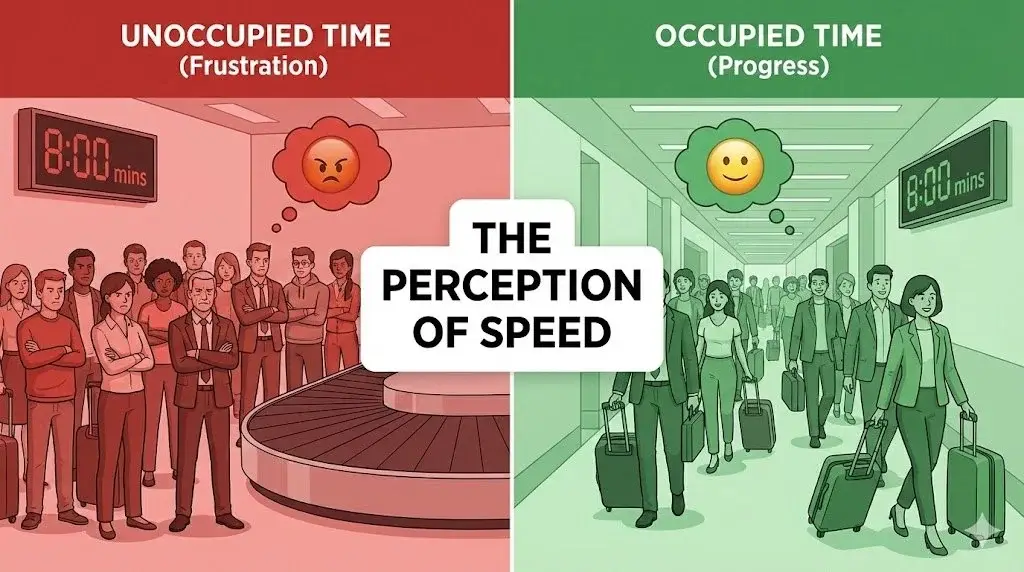
The Baggage Claim Strategy: Managing the Psychology of "The Wait"

The Houston Experiment The Houston Airport story is the foundational case study for the Psychology of Queuing. The airport realized that the objective variable (Time) mattered less than the subjective variable (Perception). When passengers were standing at the carousel staring at an empty belt, they were bored and anxious. They felt ignored. When they were walking, they were “working” toward a goal. They felt in control. The Maister Principles David Maister, an expert on business management, formulated several laws of waiting: ...

January 2, 2026