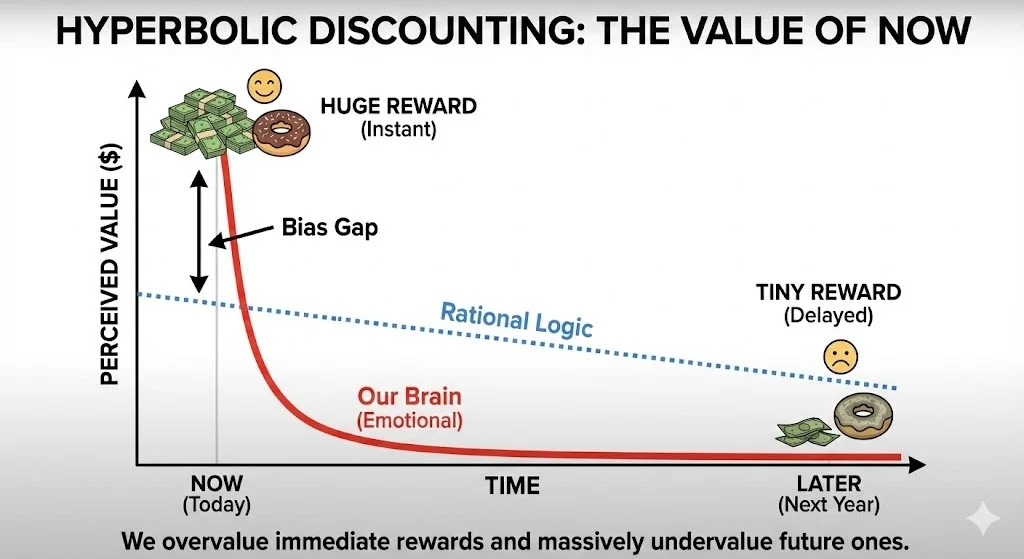
Hyperbolic Discounting: Why Users Quit Before They See the Value

The “Future Self” is a Stranger Neurologically, when you think about your “Future Self” (e.g., You in 5 years), your brain lights up in the same area as when you think about a complete stranger. We don’t empathize with our future selves. This is why we procrastinate. Present Self: “I don’t want to do the dishes. I want to watch TV.” Future Self: “I will have to do the dishes tomorrow.” ...
February 11, 2026

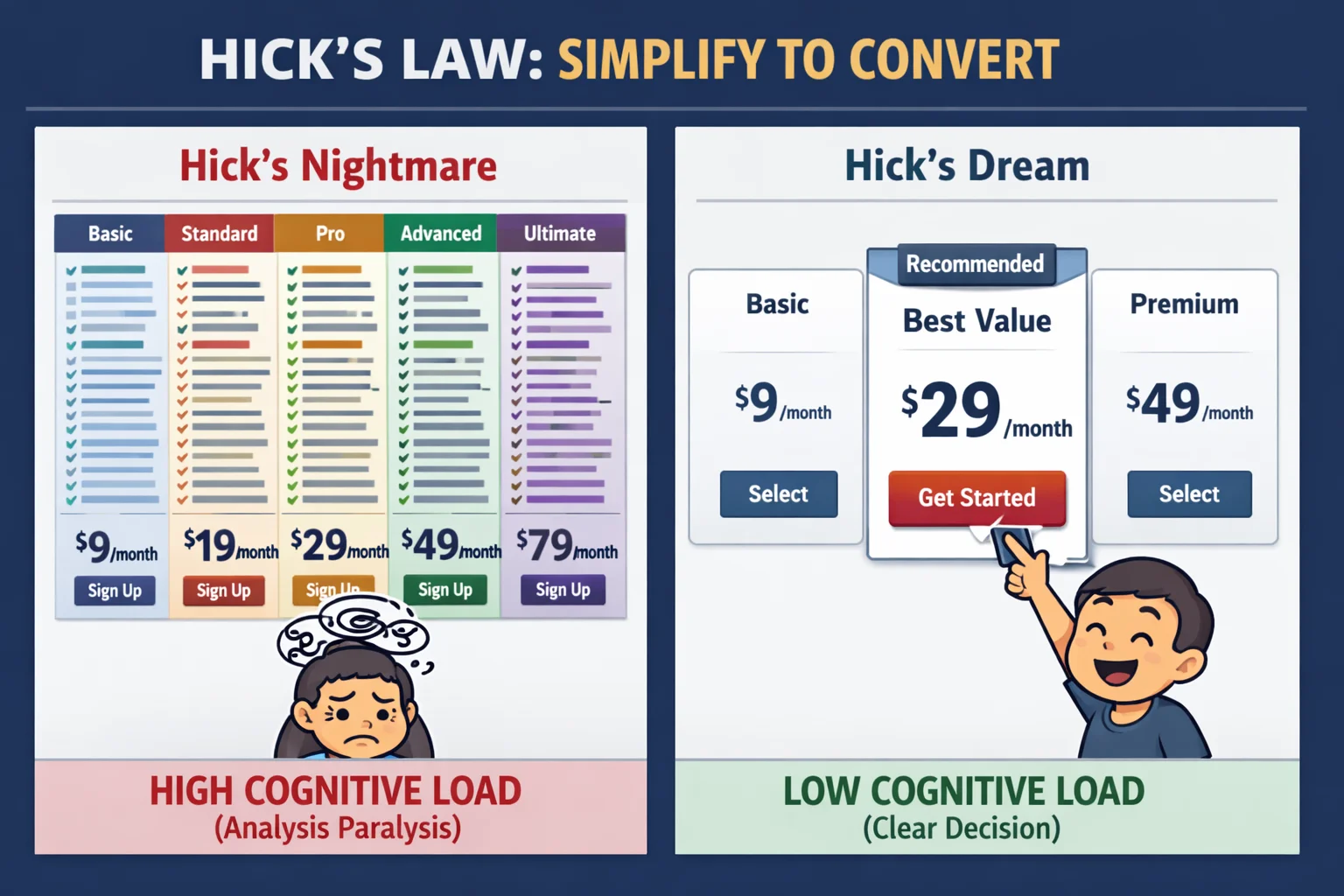
The Tyranny of Choice: How "Hick’s Law" is Killing Your Conversions

The Cognitive Load Problem Imagine walking into a restaurant, starving. They hand you a 50-page menu with no pictures. Do you feel liberated? No. You feel stressed. You scan it anxiously, terrified of picking the wrong thing, and eventually just order a burger because it’s safe. Now imagine a restaurant with a menu that has just three items: Steak, Fish, or Vegetarian. You decide in 10 seconds and feel confident. ...

February 11, 2026

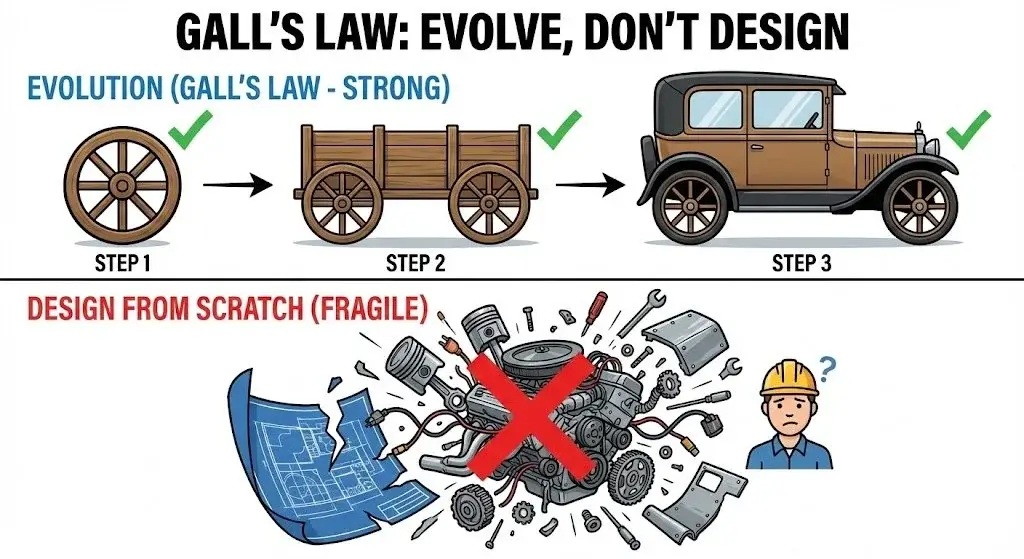
Gall’s Law: Why "Big Bang" Launches Blow Up in Your Face

The Hubris of the Architect We love to pretend we are architects. We draw boxes and arrows. We plan “scalable microservices” for a startup that has zero users. We think complexity is a sign of intelligence. Gall’s Law teaches us that Complexity is a result, not a starting point. The Mechanism of Failure Why can’t you build a complex system from scratch? Because reality is messy. When you build a simple system (e.g., a Python script that scrapes one website), you encounter real-world friction. You fix the bugs. The system “hardens.” When you try to build a complex system (e.g., a universal scraping engine for the entire web), you multiply the friction by 1,000. You have 1,000 un-hardened components interacting with each other. The number of potential failure points is not additive; it is combinatorial. The system doesn’t just fail; it behaves unpredictably. ...

January 24, 2026

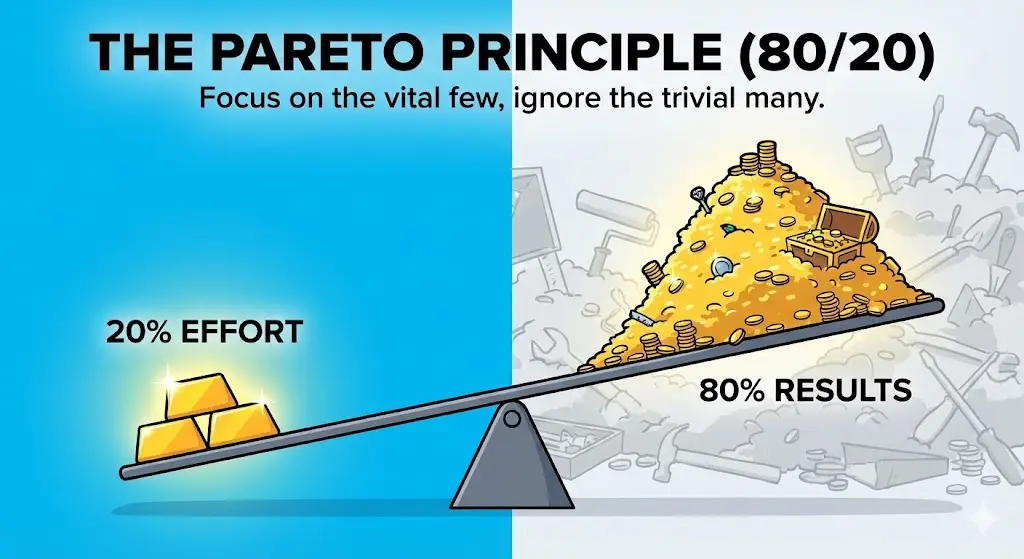
The Pareto Principle: Identify the "Vital Few" and Ignore the "Trivial Many"

The Myth of Linear Effort We grow up believing in a 1:1 relationship between Input and Output. If I study 1 hour, I learn 1 unit. If I study 2 hours, I learn 2 units. In software and business, this is a lie. The relationship is non-linear (Power Law). A single feature (like “Stories” in Instagram) can drive more engagement than the other 50 features combined. Applying 80/20 to Product Management 1. The Feature Trap (Bloatware) Open your analytics. Look at your navigation bar. I guarantee that 80% of your users only click on 2 or 3 buttons. The other 15 buttons are just gathering dust. ...

January 21, 2026

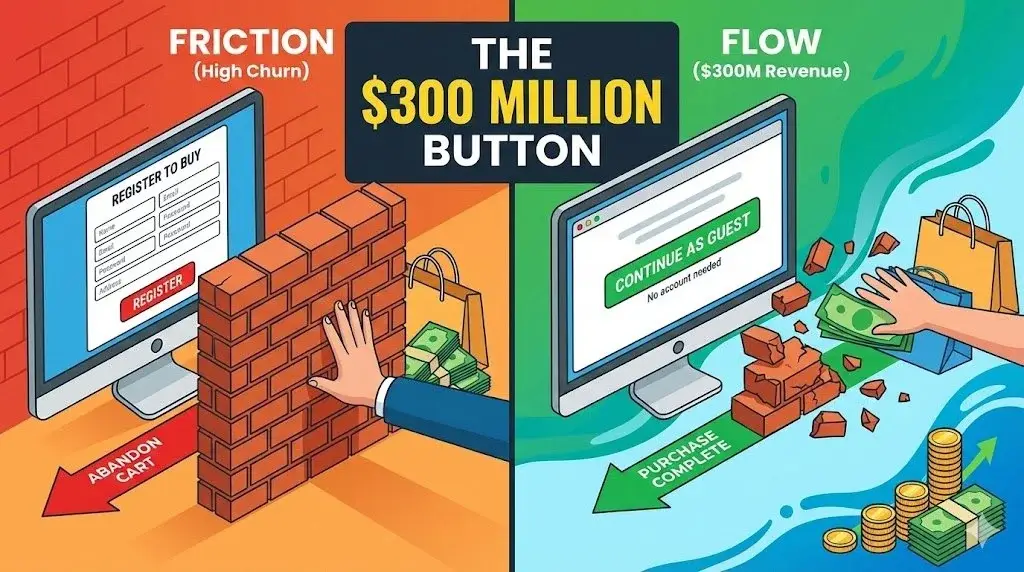
The $300 Million Button: Why Friction is the Enemy of Revenue

The “Greedy Marketer” Trap As Product Managers, we are data-greedy. We want the user’s email. We want their phone number. We want them to create a profile so we can send them newsletters and retarget them with ads. We convince ourselves that “Registration” is good for the user. “It’s for their security!” we say. But to a user, a “Register” form represents Work and Commitment. Work: I have to think of a password. I have to verify my email. ...

January 17, 2026

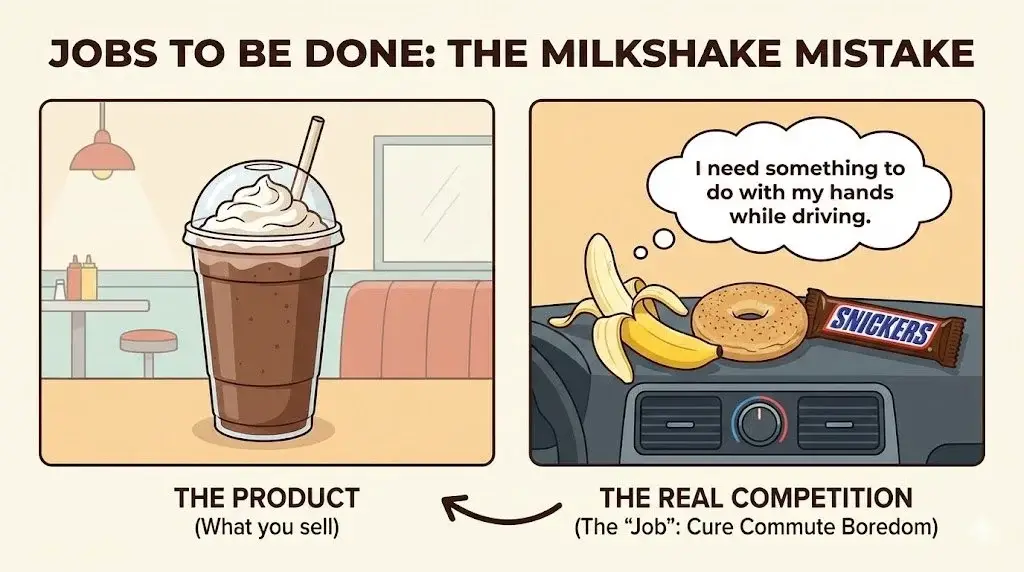
The Milkshake Mistake: Why Your Competitor Isn't Who You Think It Is

The Demographics Trap Most Product Managers start with a “Persona.” Meet Dave. He is 34. He lives in Seattle. He works in Tech. This data is factual, but it is useless. Knowing Dave’s age doesn’t tell you why he bought a newspaper this morning. Did he buy it to read the news? Or did he buy it because he needed something to hide behind on the subway to avoid talking to his neighbor? ...

January 13, 2026

The Peak-End Rule: Why Users Ignore the Average and Remember the Finale

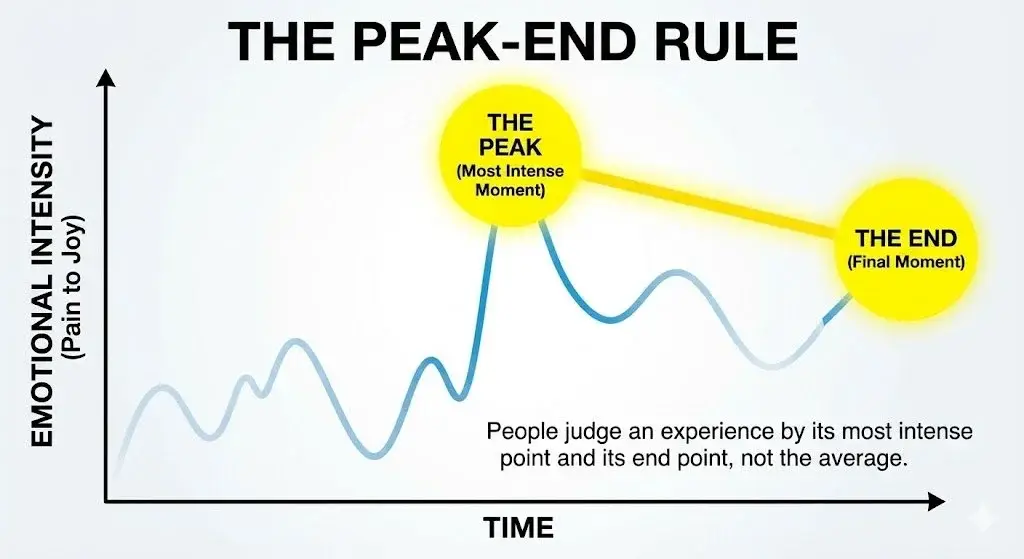
The Two Selves Daniel Kahneman argues that we have two selves: The Experiencing Self: Lives in the moment. Feels every second of frustration or joy. The Remembering Self: Keeps the score. The Remembering Self is a tyrant. It deletes 99% of the experience and only keeps the highlights. Specifically, it keeps the Peak (the highest emotional point) and the End. If you have a 5-star dinner but the waiter is rude when bringing the bill (The End), you will remember the dinner as “terrible.” ...

January 12, 2026

The Kano Model: Why Features "Expire" and How to Stay Ahead

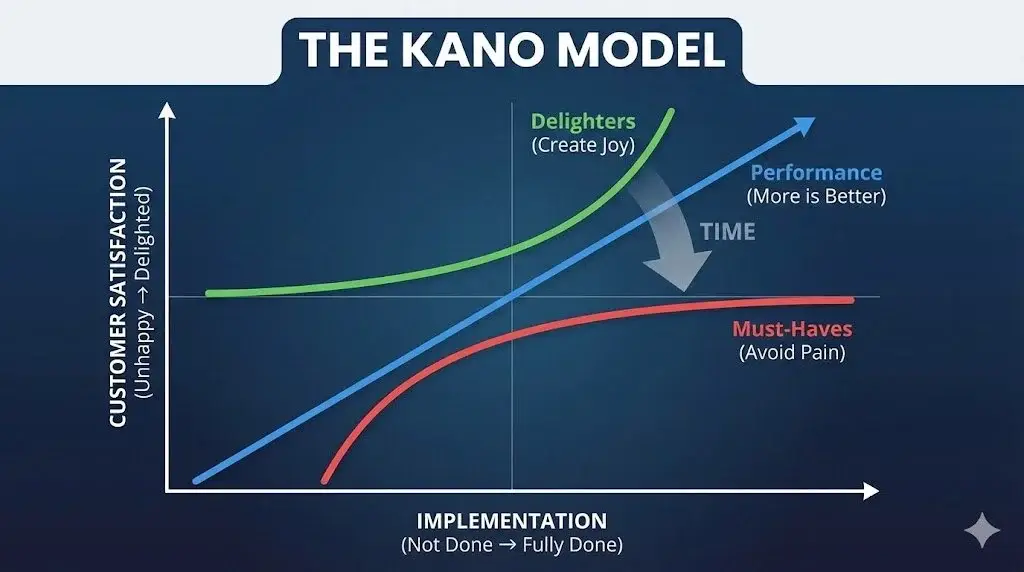
The Gravity of Expectations Product Management would be easy if customer expectations stayed static. But they don’t. Customer satisfaction is a Hedonic Treadmill. The moment you ship a revolutionary feature, the clock starts ticking. Competitors copy it. Users get used to it. The magic fades. To understand this lifecycle, we use the Kano Model. The 3 Categories of Features 1. The Basics (Must-Haves) Definition: These are non-negotiable. The Trap: You get Zero Credit for doing them well. ...

January 7, 2026

Product superiority is not a strategy. It’s a vanity metric.

There is a famous quote by Jim Barksdale, the former CEO of Netscape: “There are only two ways to make money in business: One is to bundle; the other is to unbundle.” As Product Managers, we are trained to focus on the “Unbundle” phase—creating specific, best-in-class solutions for specific problems (like Slack for chat, Zoom for video, Jira for tickets). But as you move into Executive Leadership (Director/CPO), the pendulum swings. The P&L demands efficiency, and efficiency almost always comes from Bundling. ...

January 4, 2026

You aren’t a Product Leader until you can manage a P&L.

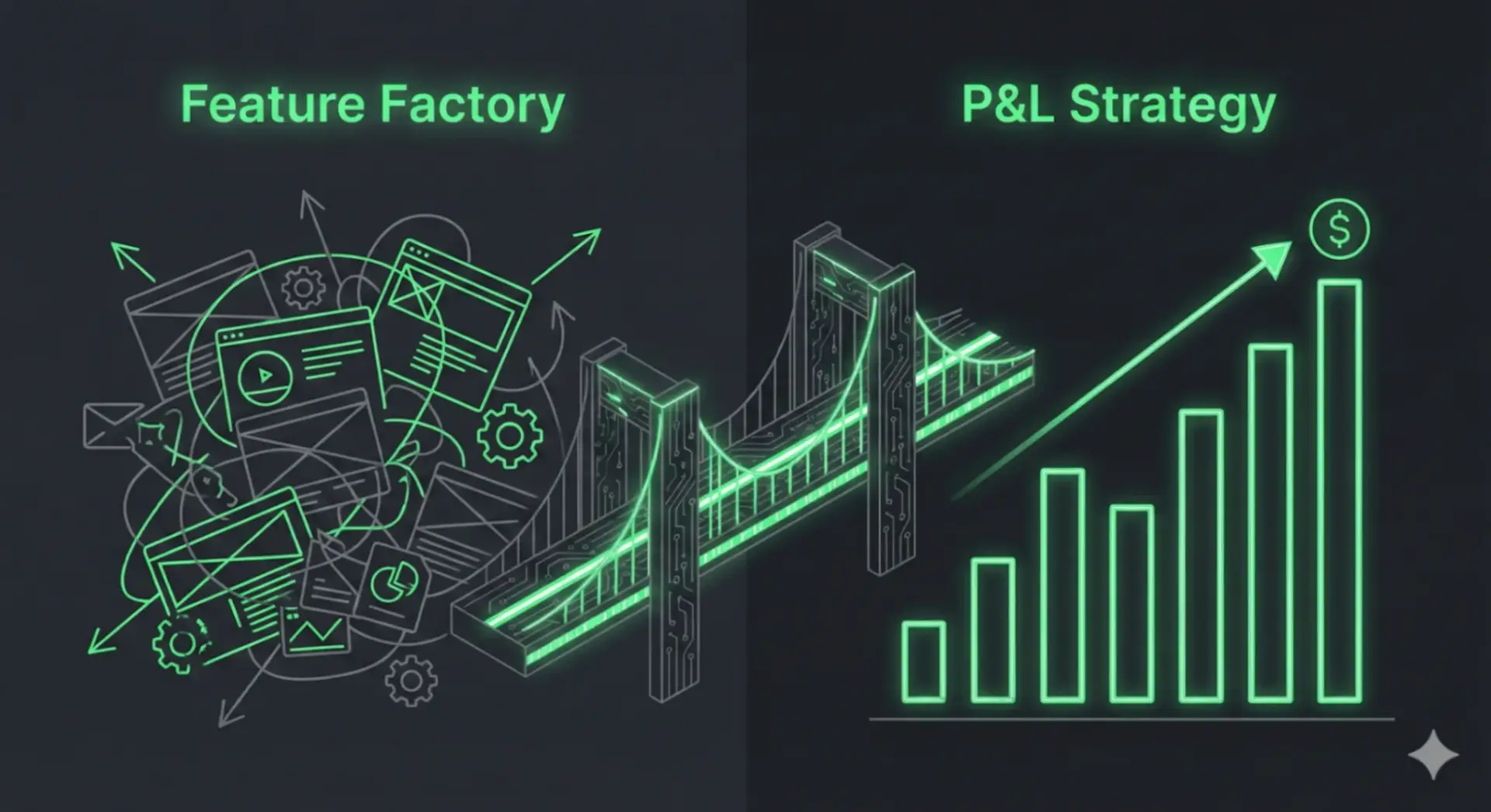
In the early stages of a Product Manager’s career, success is measured by output: features shipped, bugs fixed, and velocity maintained. But as you ascend to Principal, Director, or CPO roles, the scoreboard changes. Your code doesn’t matter anymore. Your P&L impact does. The most successful product leaders today act less like visionaries and more like capital allocators. They understand that every line of code is an investment that must return more than its cost of capital. ...

January 4, 2026