Hyperbolic Discounting: Why Users Quit Before They See the Value

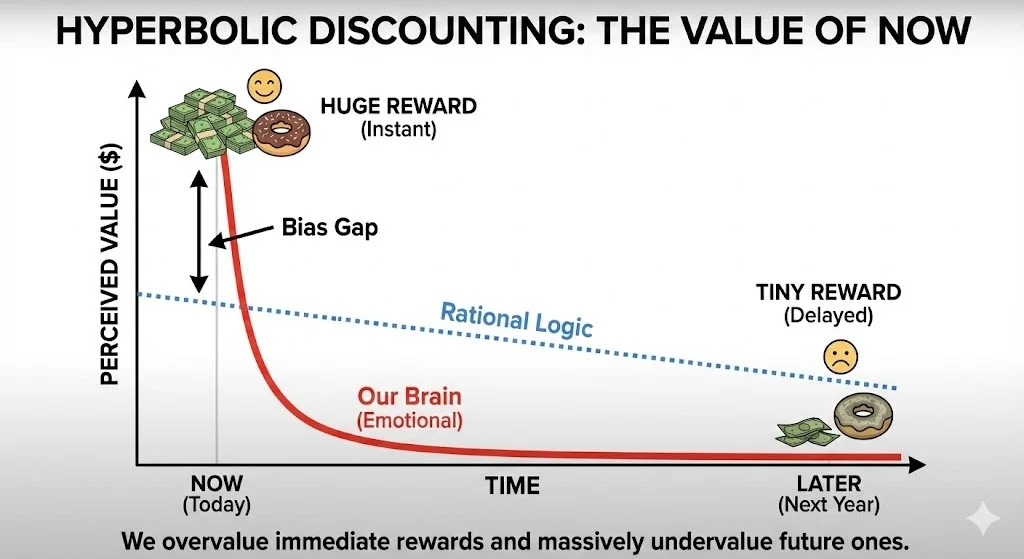
The “Future Self” is a Stranger Neurologically, when you think about your “Future Self” (e.g., You in 5 years), your brain lights up in the same area as when you think about a complete stranger. We don’t empathize with our future selves. This is why we procrastinate. Present Self: “I don’t want to do the dishes. I want to watch TV.” Future Self: “I will have to do the dishes tomorrow.” ...
February 11, 2026

The Zeigarnik Effect: Why 99% Complete is More Powerful Than 100%

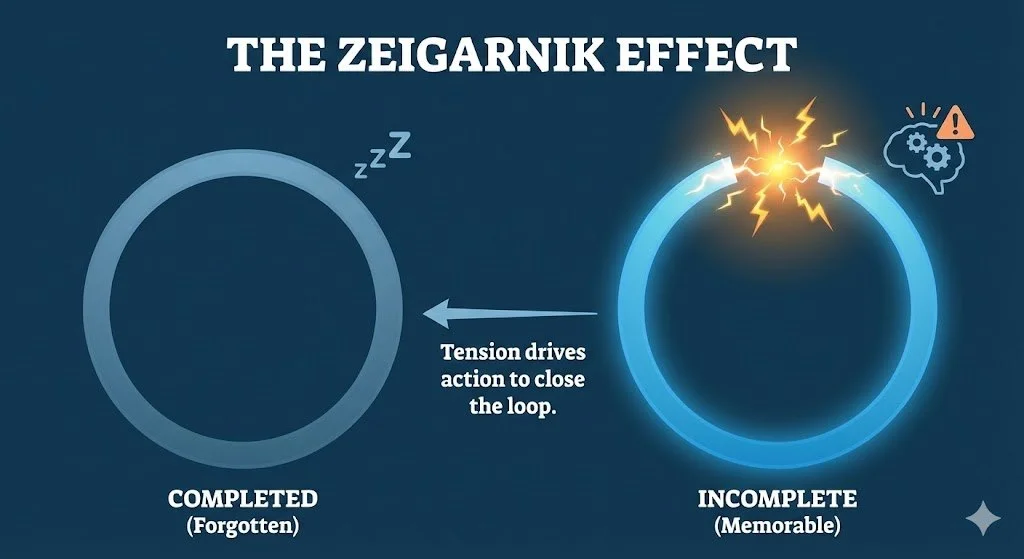
The Psychology of the “Cliffhanger” Bluma Zeigarnik proved that people remember uncompleted or interrupted tasks 90% better than completed ones. This is why you remember the one bug you couldn’t fix on Friday afternoon all weekend, but you forget the 10 bugs you fixed on Monday. The “Open Loop” creates a state of mild anxiety. The only way to relieve the anxiety is to return and finish the task. How to Weaponize This in Product Design 1. The “Almost Done” Progress Bar (LinkedIn) LinkedIn is the master of this. For years, users saw a “Profile Strength” meter. It would get stuck at “Intermediate.” Users would spend hours endorsing strangers and adding obscure skills just to get that bar to “All-Star.” The Trick: If they showed no bar, nobody would care. By showing a partial bar, they created a Zeigarnik itch. ...

February 11, 2026

The IKEA Effect: Why We Love the Products We Build ourselves (And How to Use It)

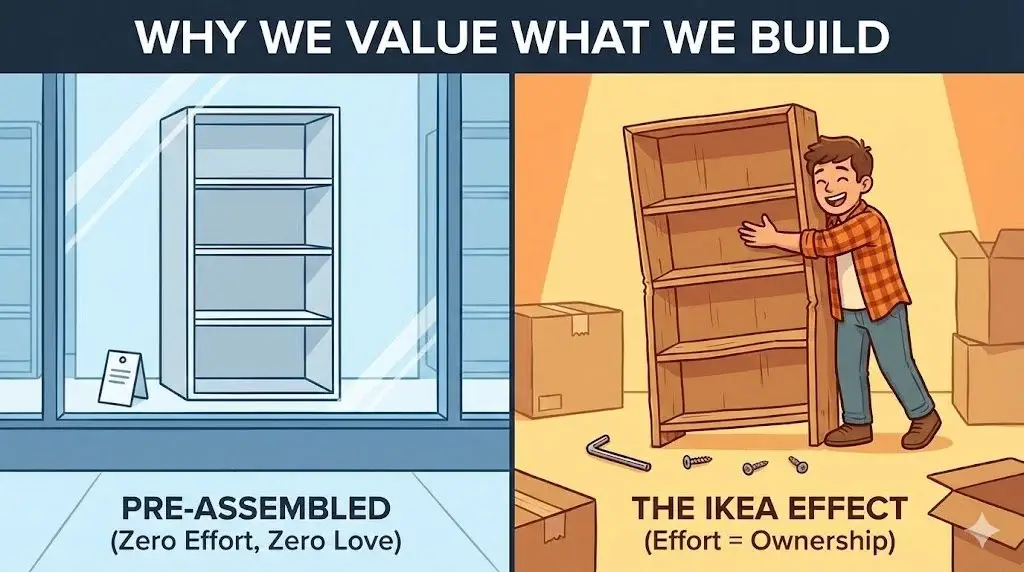
The Wobbly Bookshelf Paradox There is a strange paradox in human psychology. We hate work, but we love the fruits of our labor. Researchers Dan Ariely, Michael Norton, and Daniel Mochon dubbed this the “IKEA Effect.” In their experiments, they found that people who built a simple LEGO set valued it significantly higher than people who were just handed the completed set. The act of creation—even a simple, guided one—creates a cognitive bias. We assume that anything we spent time on must be valuable. ...

December 25, 2025