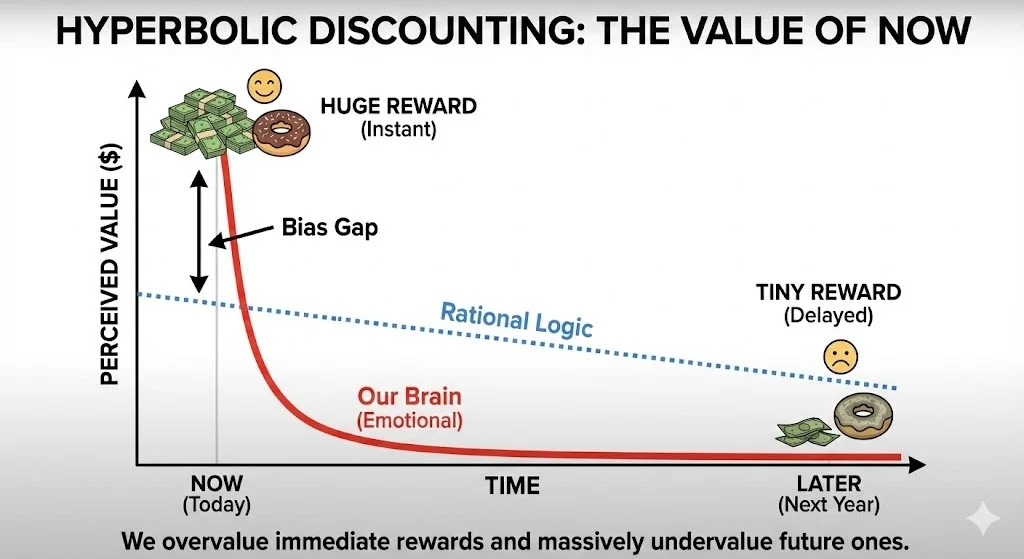
Hyperbolic Discounting: Why Users Quit Before They See the Value

The “Future Self” is a Stranger Neurologically, when you think about your “Future Self” (e.g., You in 5 years), your brain lights up in the same area as when you think about a complete stranger. We don’t empathize with our future selves. This is why we procrastinate. Present Self: “I don’t want to do the dishes. I want to watch TV.” Future Self: “I will have to do the dishes tomorrow.” ...
February 11, 2026

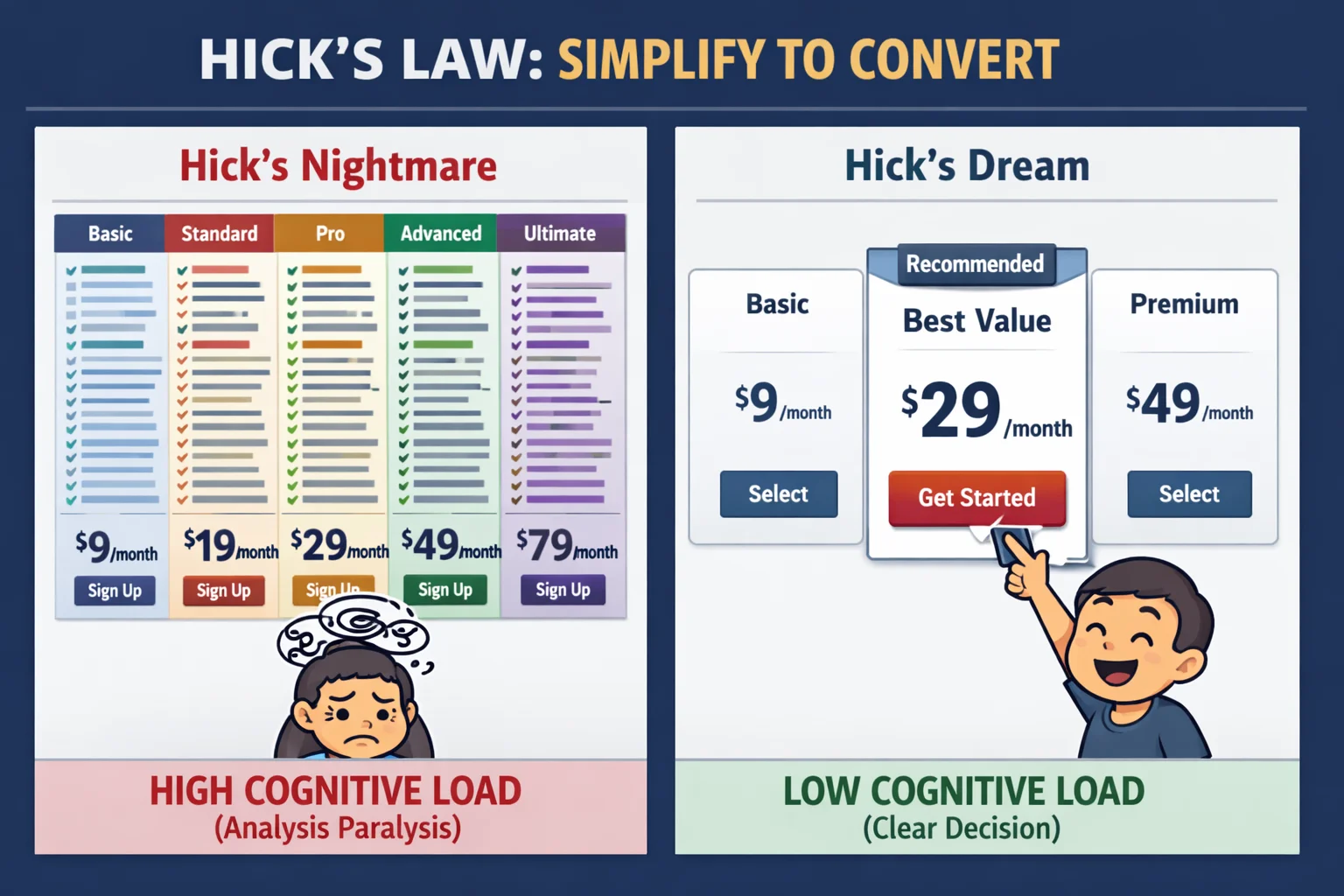
The Tyranny of Choice: How "Hick’s Law" is Killing Your Conversions

The Cognitive Load Problem Imagine walking into a restaurant, starving. They hand you a 50-page menu with no pictures. Do you feel liberated? No. You feel stressed. You scan it anxiously, terrified of picking the wrong thing, and eventually just order a burger because it’s safe. Now imagine a restaurant with a menu that has just three items: Steak, Fish, or Vegetarian. You decide in 10 seconds and feel confident. ...

February 11, 2026

The Zeigarnik Effect: Why 99% Complete is More Powerful Than 100%

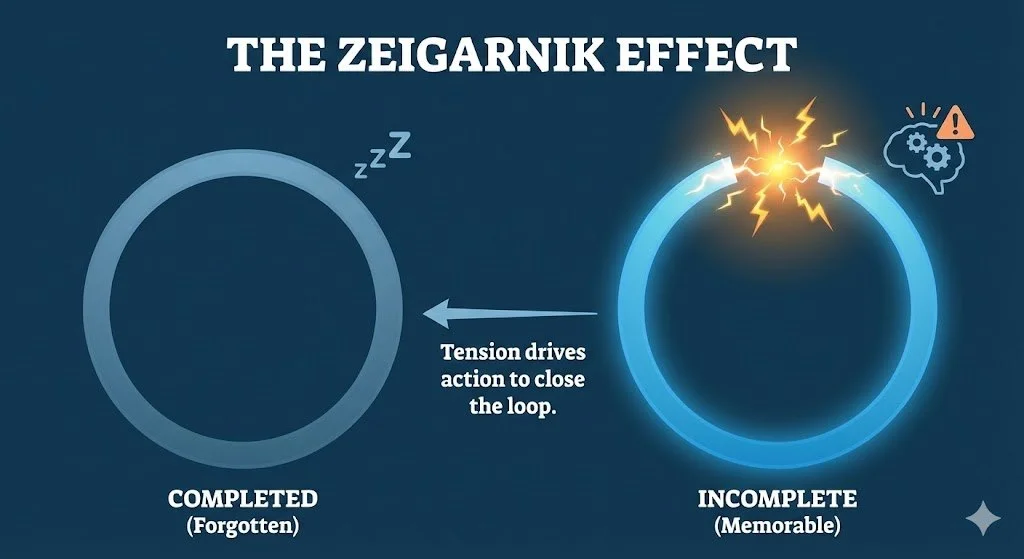
The Psychology of the “Cliffhanger” Bluma Zeigarnik proved that people remember uncompleted or interrupted tasks 90% better than completed ones. This is why you remember the one bug you couldn’t fix on Friday afternoon all weekend, but you forget the 10 bugs you fixed on Monday. The “Open Loop” creates a state of mild anxiety. The only way to relieve the anxiety is to return and finish the task. How to Weaponize This in Product Design 1. The “Almost Done” Progress Bar (LinkedIn) LinkedIn is the master of this. For years, users saw a “Profile Strength” meter. It would get stuck at “Intermediate.” Users would spend hours endorsing strangers and adding obscure skills just to get that bar to “All-Star.” The Trick: If they showed no bar, nobody would care. By showing a partial bar, they created a Zeigarnik itch. ...

February 11, 2026

Loss Aversion: Why Your Users Fight Harder to "Keep" Than to "Win"

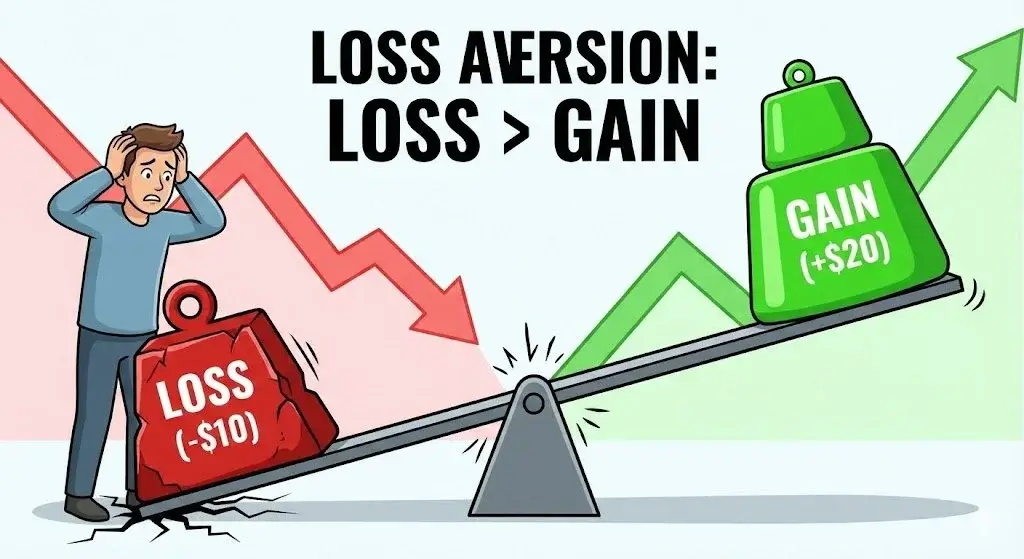
The Asymmetry of Value Imagine I offer you a coin flip. Heads: You win $20. Tails: You lose $20. Would you take the bet? Most people say No. What if I change it? Heads: You win $40. Tails: You lose $20. Most people still hesitate. Mathematically, this is irrational. The “Expected Value” is positive. Psychologically, it makes perfect sense. The pain of losing $20 outweighs the joy of winning $40. We are hardwired to protect our resources. ...

January 18, 2026

The Peak-End Rule: Why Users Ignore the Average and Remember the Finale

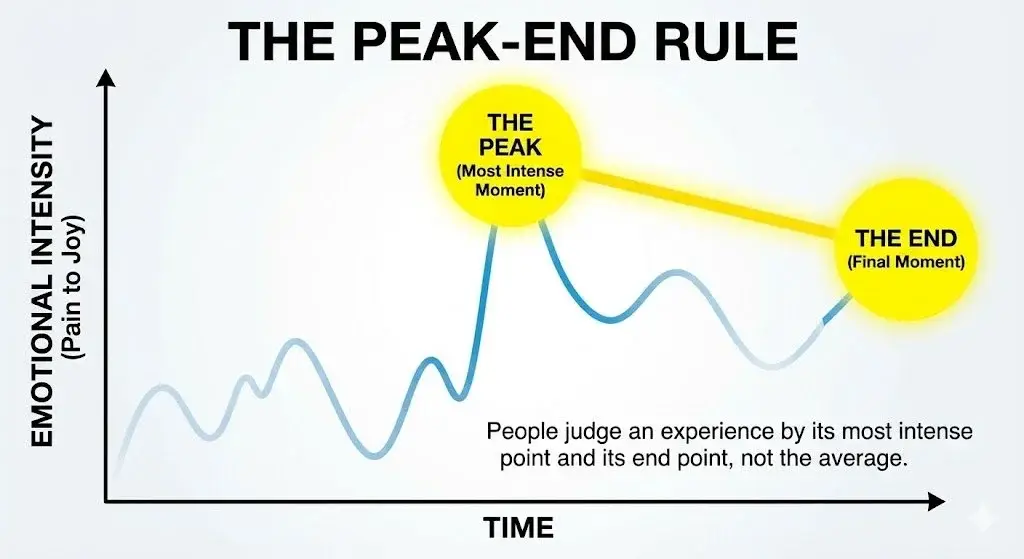
The Two Selves Daniel Kahneman argues that we have two selves: The Experiencing Self: Lives in the moment. Feels every second of frustration or joy. The Remembering Self: Keeps the score. The Remembering Self is a tyrant. It deletes 99% of the experience and only keeps the highlights. Specifically, it keeps the Peak (the highest emotional point) and the End. If you have a 5-star dinner but the waiter is rude when bringing the bill (The End), you will remember the dinner as “terrible.” ...

January 12, 2026

The Paywall Paradox: Why the Most Profitable Apps Are Also the Most Generous

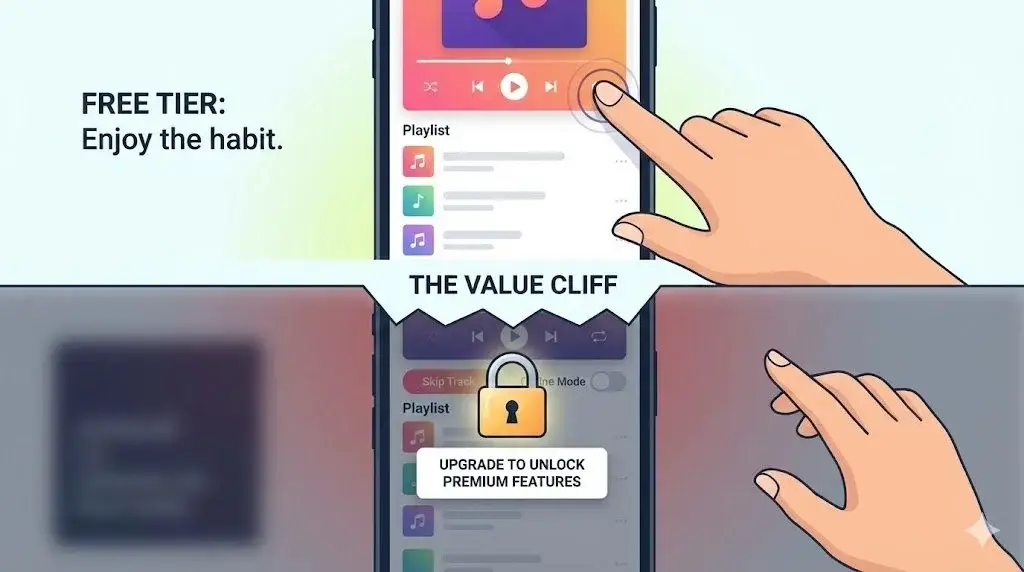
The “Free” Illusion There is no such thing as a free app. If an app is “free,” it is one of two things: You are the product (they are selling your data/ads). It is a marketing channel for a paid product (Freemium). Freemium is the dominant business model for modern B2C SaaS. But getting it right is arguably the hardest challenge in product strategy. The Economics of Generosity Why give your hard work away for free? Because Customer Acquisition Cost (CAC) is expensive. Running ads on Facebook and Google to get someone to download a $5 app is often unsustainable. ...

January 1, 2026

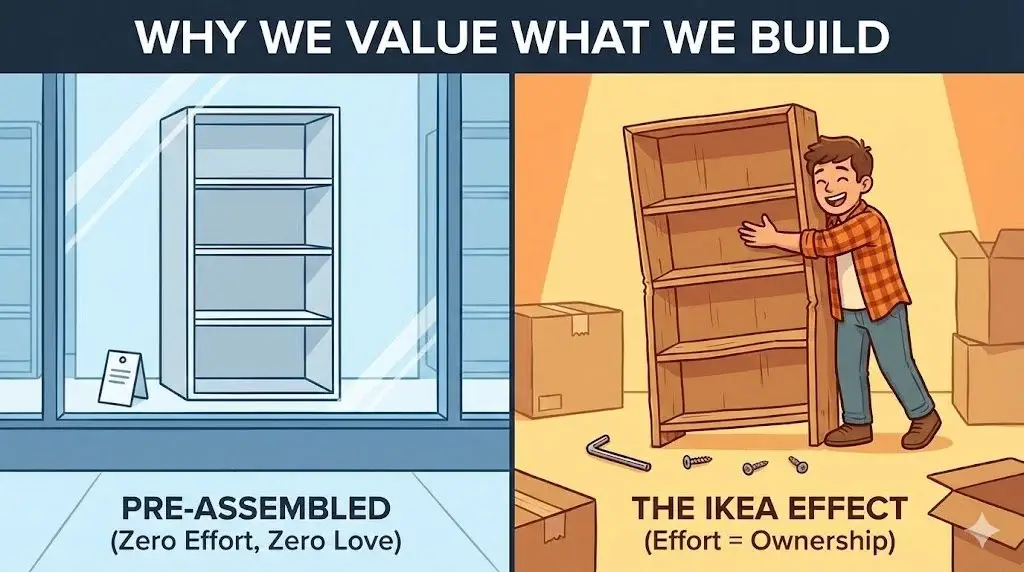
The IKEA Effect: Why We Love the Products We Build ourselves (And How to Use It)

The Wobbly Bookshelf Paradox There is a strange paradox in human psychology. We hate work, but we love the fruits of our labor. Researchers Dan Ariely, Michael Norton, and Daniel Mochon dubbed this the “IKEA Effect.” In their experiments, they found that people who built a simple LEGO set valued it significantly higher than people who were just handed the completed set. The act of creation—even a simple, guided one—creates a cognitive bias. We assume that anything we spent time on must be valuable. ...

December 25, 2025

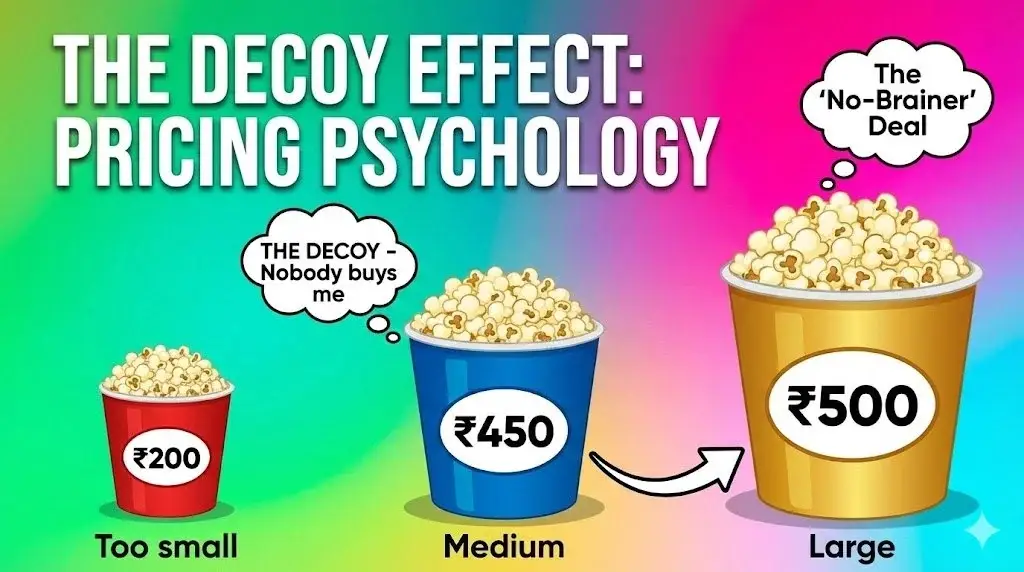
The Decoy Effect: How to Use "Useless" Options to Drive Revenue

The Rational Shopper Myth We like to believe we are rational. We think we judge a product’s value based on its intrinsic worth. But behavioral economics tells us a different story: Humans are terrible at evaluating absolute value. We are only good at evaluating relative value. We don’t know if a subscription is “worth” $50. We only know if it’s “better value” than the $40 option next to it. The Experiment This phenomenon was famously demonstrated by Dan Ariely (author of Predictably Irrational) using an Economist magazine subscription offer. ...

December 22, 2025

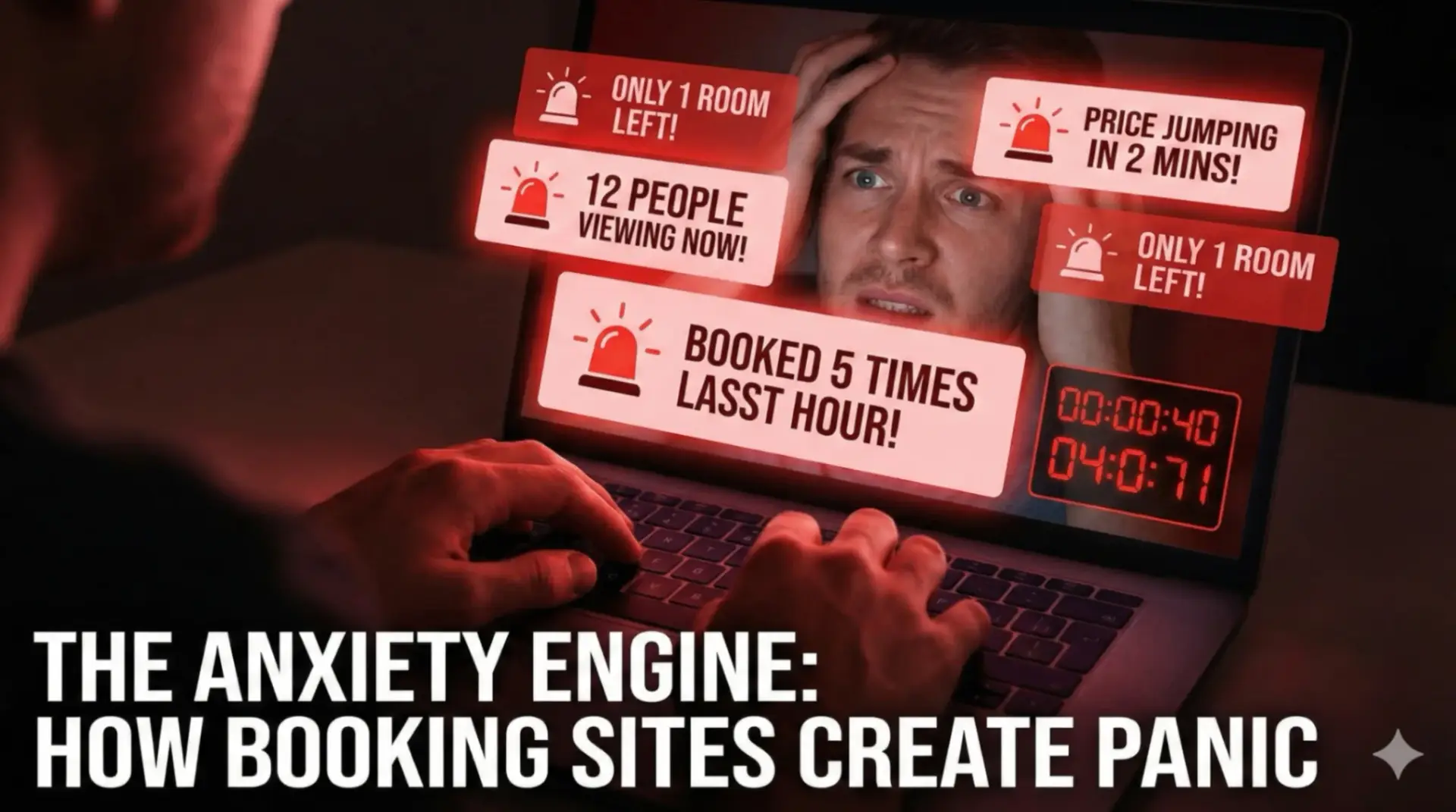
The Anxiety Engine: How Travel Sites Weaponize FOMO to Make You Convert

The Stress of the Search Booking a holiday should be fun. Yet, navigating modern travel websites often feels like a high-stakes trading floor. I recently tried to book a weekend getaway. Within seconds of landing on a hotel page, the UI started screaming at me. Red text. Flashing icons. Pop-ups showing recent bookings from “Someone in Germany.” I wasn’t being helped to make a decision; I was being pressured into one. ...

December 18, 2025

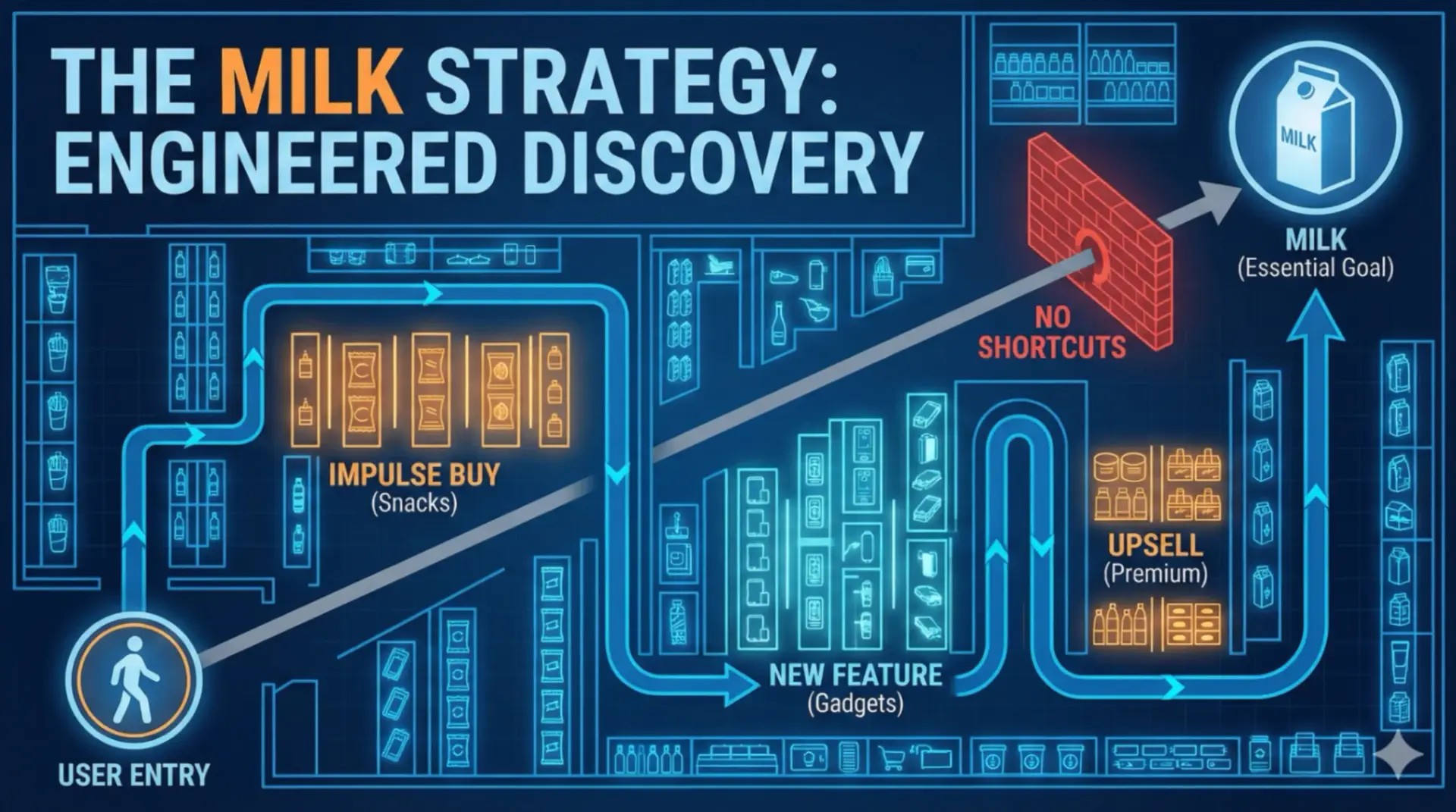
The Milk Strategy: Designing User Flows for Discovery, Not Just Speed

The Supermarket Layout It is a universal truth of retail: The essentials (Milk, Bread, Eggs) are never near the door. They are located in the farthest, deepest corner of the store. This is known as the “Perimeter Strategy.” Retailers know that 90% of customers have “Milk” on their mental checklist. It is a high-intent, low-negotiation item. You aren’t going to leave the store without it. So, they use the Milk as an Anchor. ...

December 11, 2025