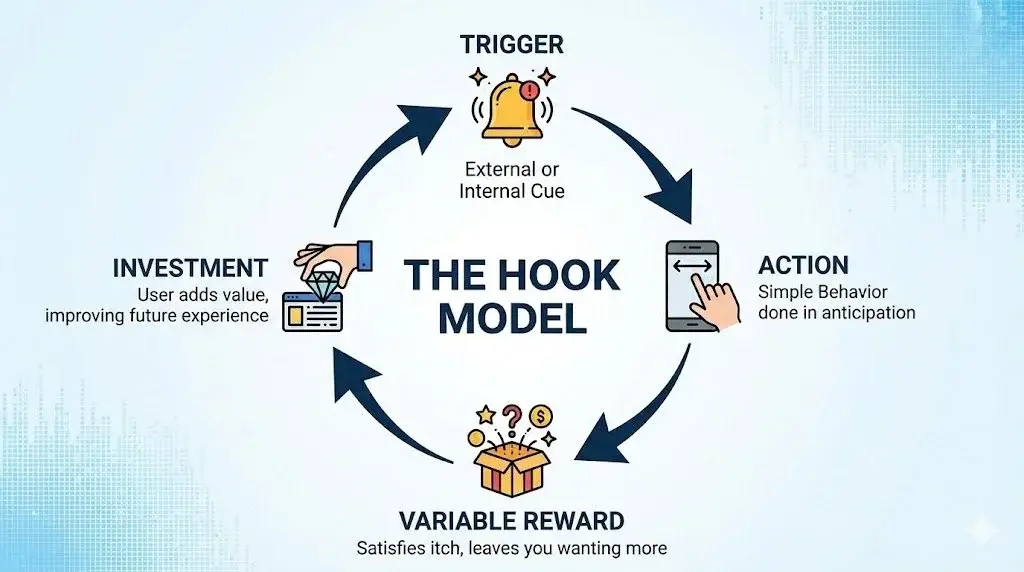
The Hook Model: How to Manufacture Habits (and Why Slot Machines are Addictive)

The 4-Step Loop Why do some products flop while others become obsessions? It’s not just “value.” It’s the delivery mechanism. The Hook Model explains the cycle that turns a conscious choice into an automatic behavior.1 1. The Trigger (The Cue) Every habit starts with a spark. External Triggers: Emails, push notifications, icons with red badges.2 These are training wheels. Internal Triggers: This is the goal. You want the user’s emotions to trigger the app. ...
January 17, 2026

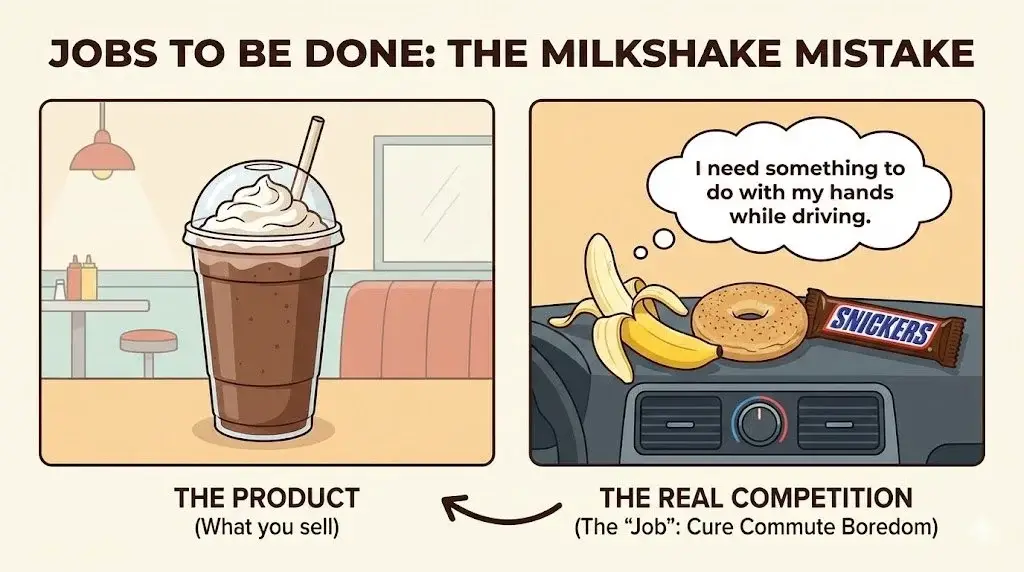
The Milkshake Mistake: Why Your Competitor Isn't Who You Think It Is

The Demographics Trap Most Product Managers start with a “Persona.” Meet Dave. He is 34. He lives in Seattle. He works in Tech. This data is factual, but it is useless. Knowing Dave’s age doesn’t tell you why he bought a newspaper this morning. Did he buy it to read the news? Or did he buy it because he needed something to hide behind on the subway to avoid talking to his neighbor? ...

January 13, 2026

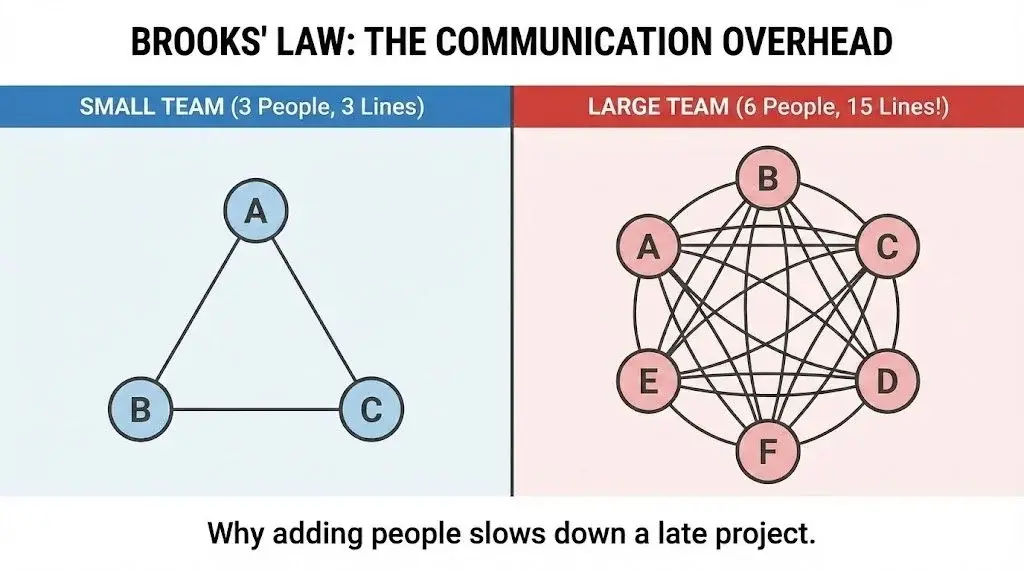
Brooks’ Law: Why Hiring More Developers Will Kill Your Deadline

The Panic Hire It is the most natural instinct in business. If you need to dig a ditch and you are behind schedule, you hire more diggers. Two people can dig a ditch twice as fast as one. Labor is interchangeable. Managers assume coding is like digging ditches. It is not. Coding is like performing surgery. In his 1975 classic The Mythical Man-Month, Fred Brooks observed a phenomenon that plagues the tech industry to this day: The “Rescue” Paradox. When a project is late, adding fresh bodies to the team actually pushes the delivery date further out. ...

January 12, 2026

The Peak-End Rule: Why Users Ignore the Average and Remember the Finale

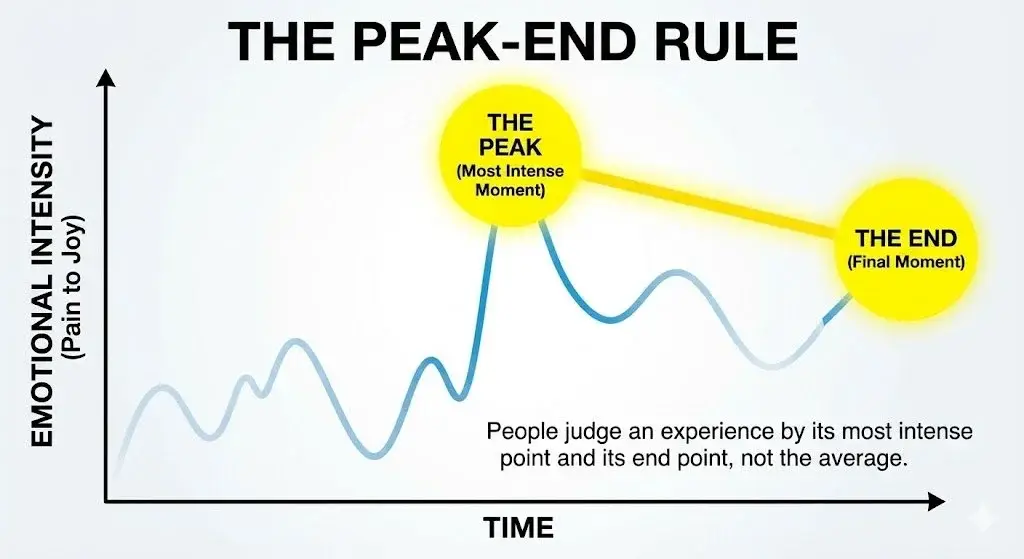
The Two Selves Daniel Kahneman argues that we have two selves: The Experiencing Self: Lives in the moment. Feels every second of frustration or joy. The Remembering Self: Keeps the score. The Remembering Self is a tyrant. It deletes 99% of the experience and only keeps the highlights. Specifically, it keeps the Peak (the highest emotional point) and the End. If you have a 5-star dinner but the waiter is rude when bringing the bill (The End), you will remember the dinner as “terrible.” ...

January 12, 2026

Conway’s Law: Why Your Product is Just a Mirror of Your Internal Politics

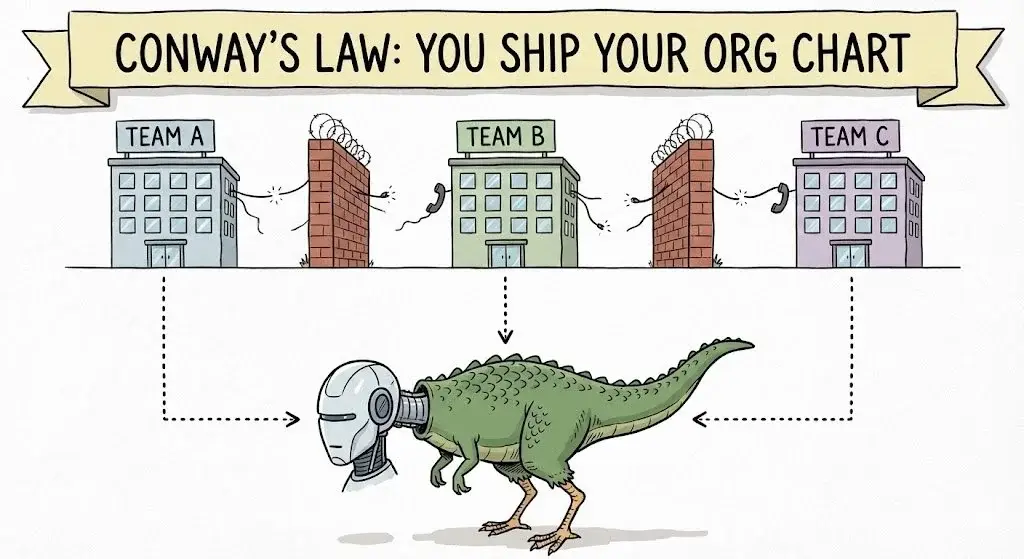
The Famous Sketch In 2011, an engineer named Manu Cornet drew a famous set of cartoons depicting the organizational charts of big tech companies. Apple: A tiny red dot (Jobs) connected to everything. (Result: Highly integrated, singular vision). Microsoft: Distinct pyramids pointing guns at each other. (Result: Windows vs. Office vs. Xbox felt like warring nations). Amazon: Strict, hierarchical pyramids. (Result: A platform of strictly defined, modular services). These drawings were funny because they were true. They were visual proof of Conway’s Law. ...

January 11, 2026

The Early Adopter Trap: How to Cross the Chasm Without Dying

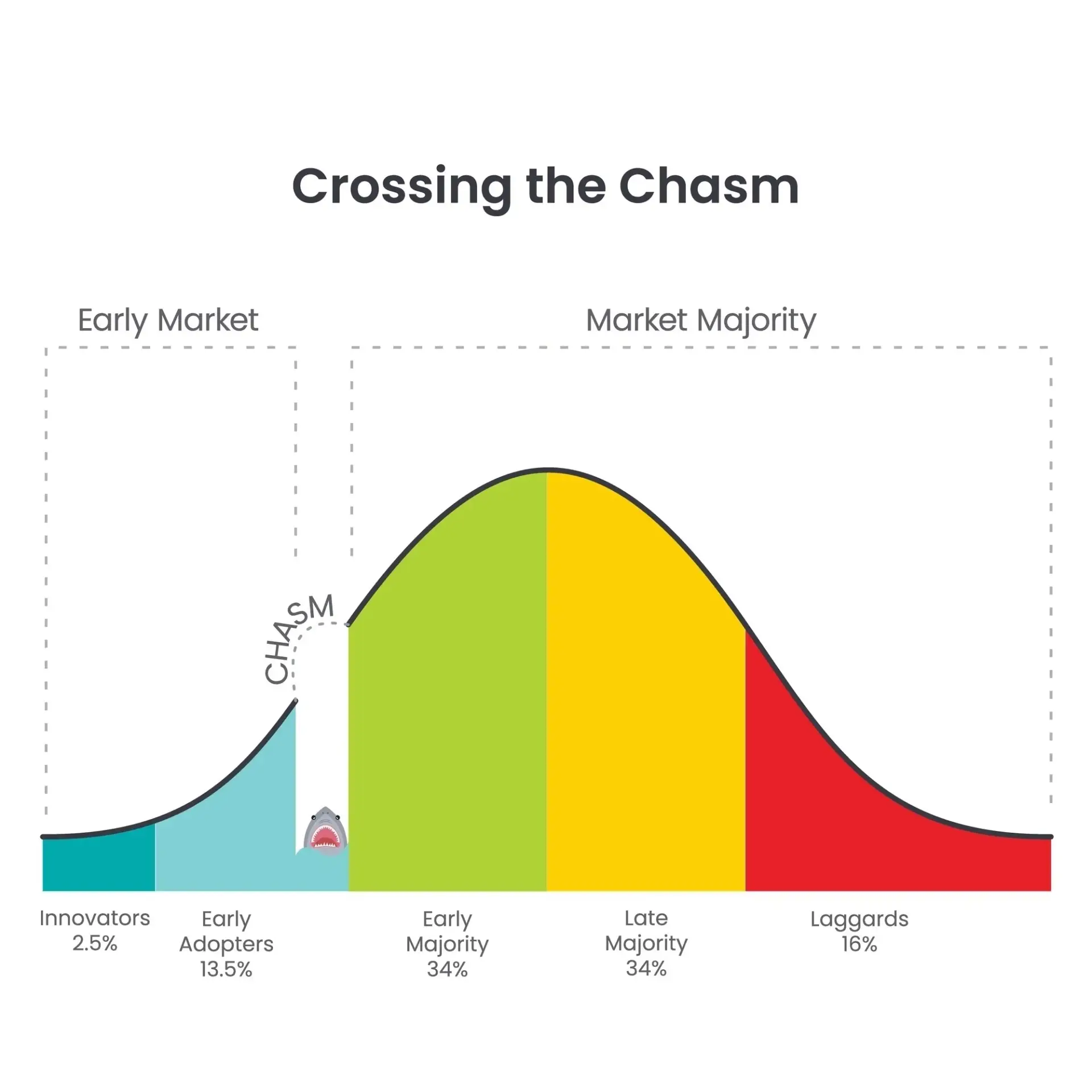
The Technology Adoption Curve Most Product Managers know the standard Bell Curve of adoption: Innovators (2.5%): Tech enthusiasts who try code on GitHub just for fun. Early Adopters (13.5%): Visionaries looking for a competitive advantage. Early Majority (34%): Pragmatists looking for a solution to a problem. Late Majority (34%): Conservatives who buy only when forced. Laggards (16%): Skeptics (User who still buy CDs). We assume this is a smooth curve. You slide from one group to the next. Geoffrey Moore pointed out that it is not smooth. There is a massive crack—a Chasm—between the Early Adopters and the Early Majority. ...

January 10, 2026

The Broken Windows Theory: How "Visual Debt" Rots Your Product Culture

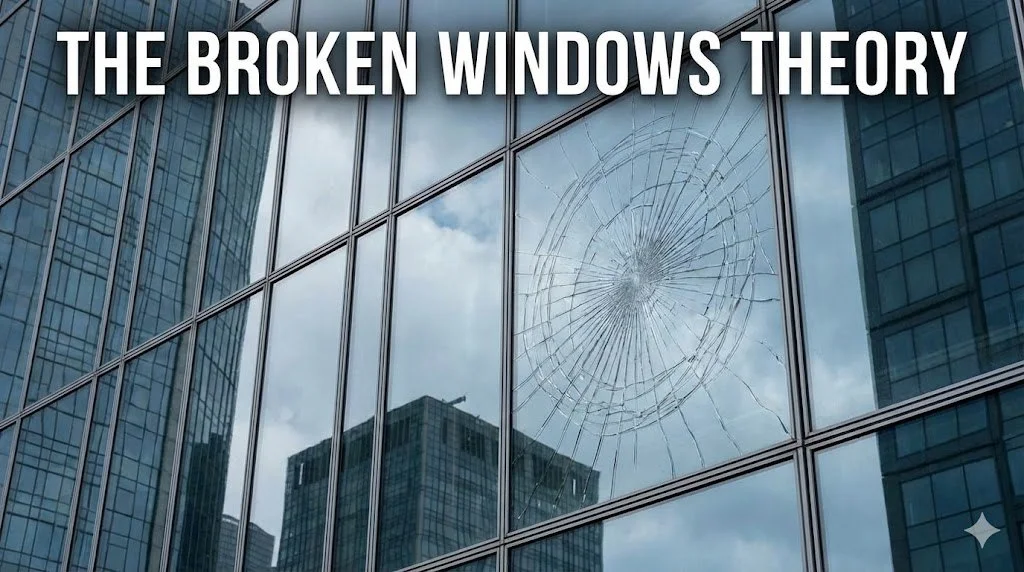
The 1969 Experiment In 1969, Stanford psychologist Philip Zimbardo parked a car in a rough neighborhood in the Bronx and left the hood open. Within 10 minutes, it was stripped for parts. Then, he parked a pristine car in a wealthy neighborhood in Palo Alto. It sat untouched for a week. **Then, Zimbardo took a hammer and smashed one window of the Palo Alto car.**Within hours, the wealthy neighbors tore the car apart. ...

January 8, 2026

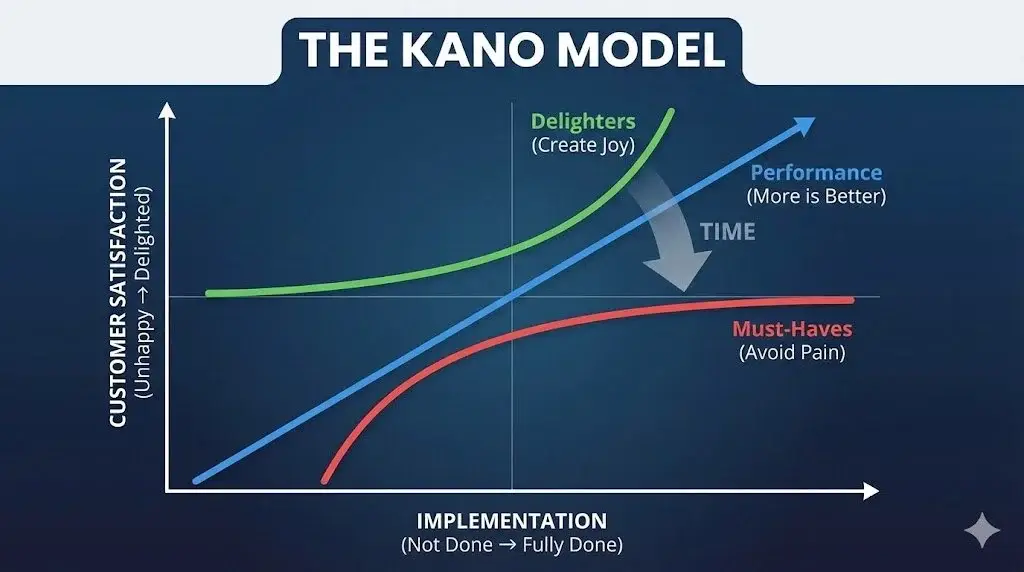
The Kano Model: Why Features "Expire" and How to Stay Ahead

The Gravity of Expectations Product Management would be easy if customer expectations stayed static. But they don’t. Customer satisfaction is a Hedonic Treadmill. The moment you ship a revolutionary feature, the clock starts ticking. Competitors copy it. Users get used to it. The magic fades. To understand this lifecycle, we use the Kano Model. The 3 Categories of Features 1. The Basics (Must-Haves) Definition: These are non-negotiable. The Trap: You get Zero Credit for doing them well. ...

January 7, 2026

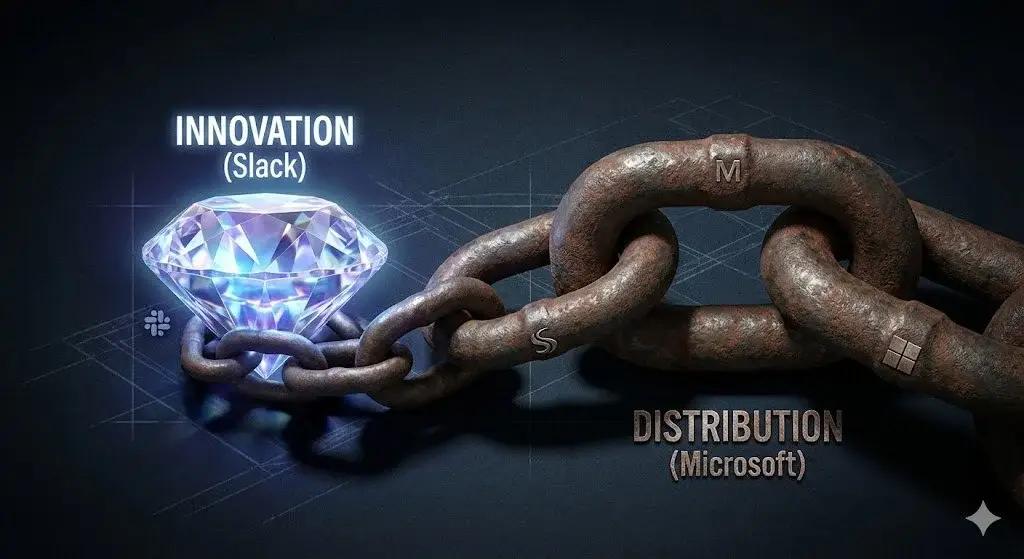
Product superiority is not a strategy. It’s a vanity metric.

There is a famous quote by Jim Barksdale, the former CEO of Netscape: “There are only two ways to make money in business: One is to bundle; the other is to unbundle.” As Product Managers, we are trained to focus on the “Unbundle” phase—creating specific, best-in-class solutions for specific problems (like Slack for chat, Zoom for video, Jira for tickets). But as you move into Executive Leadership (Director/CPO), the pendulum swings. The P&L demands efficiency, and efficiency almost always comes from Bundling. ...

January 4, 2026

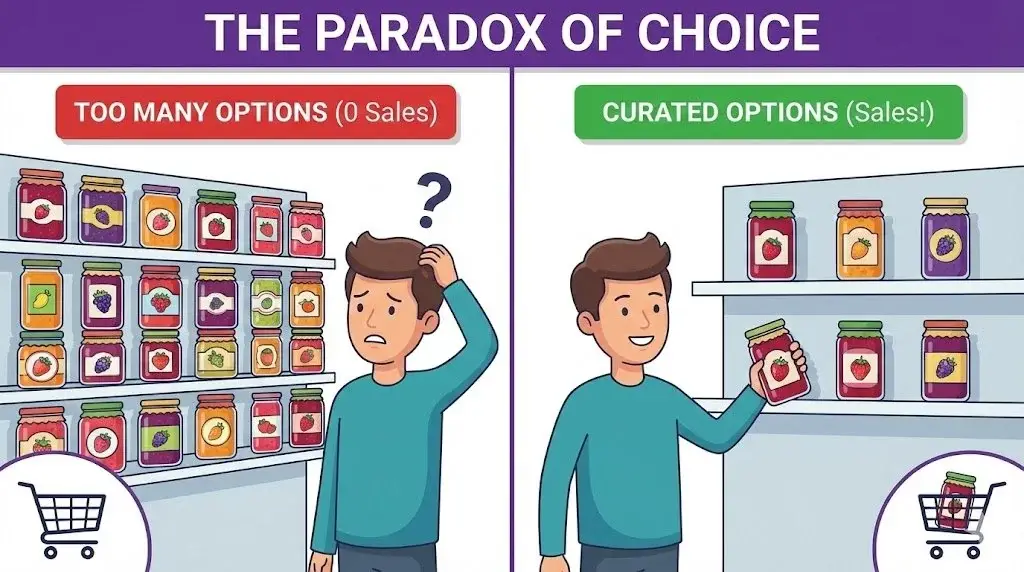
The Jam Experiment: Why Offering Less Options Drives More Revenue

The Paralysis of Abundance We live in a world of abundance. Walk down the cereal aisle, and you face 50 options. Open Netflix, and you have 5,000 movies. Logic suggests that more options increase the likelihood of finding the “perfect fit.” Psychology proves the opposite: More options increase anxiety. Barry Schwartz, author of The Paradox of Choice, argues that as options increase, two things happen: Analysis Paralysis: It becomes harder to choose. ...

January 4, 2026