The Decathlon Maze: Why Friction is Sometimes a Feature, Not a Bug

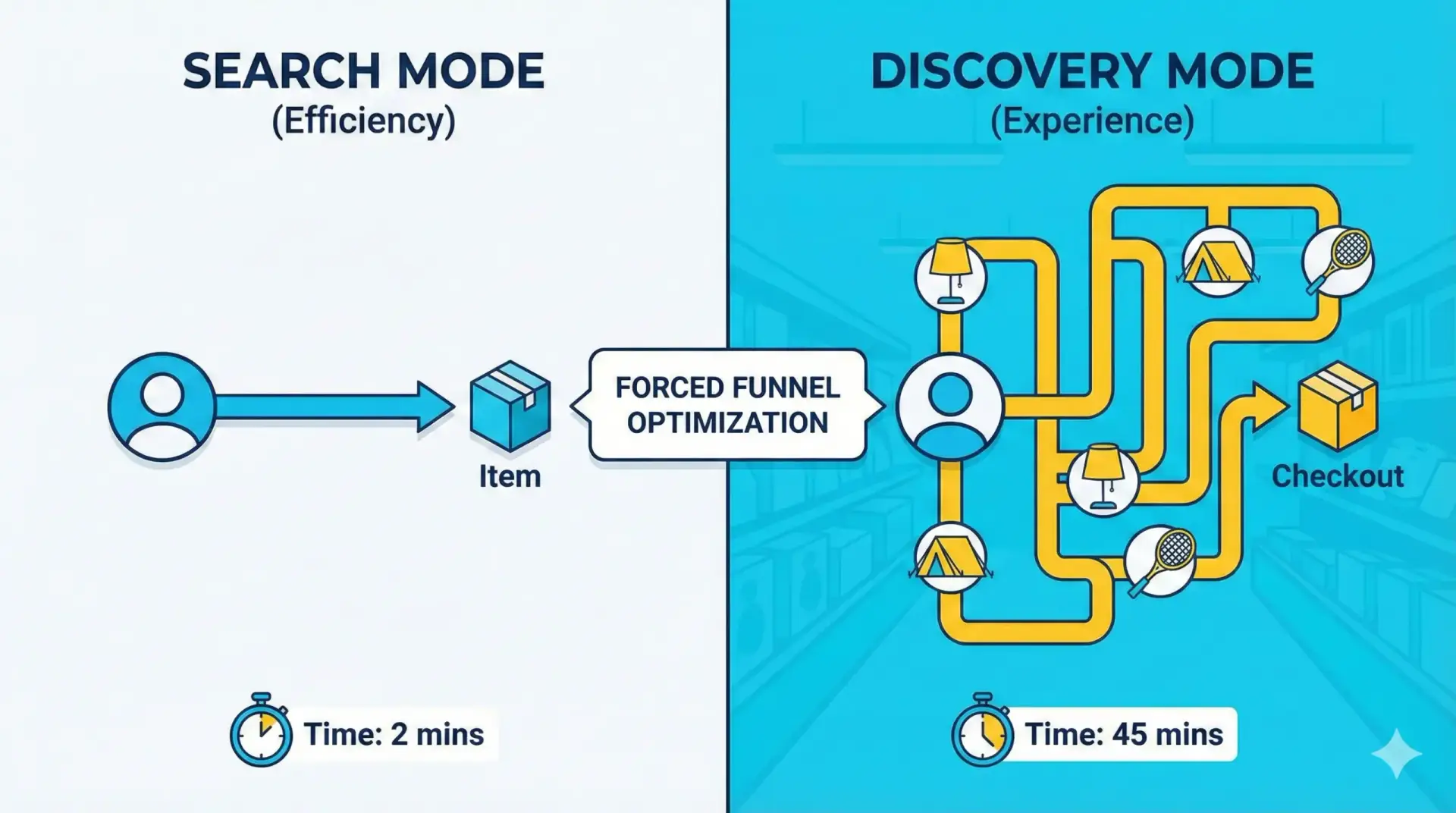
The “Quick Trip” Myth Last weekend, I visited the local Decathlon in Pune. My goal was simple: buy a swimming cap. Total planned cost: ₹149. Time required: 5 minutes. Reality: I walked out 45 minutes later with a swimming cap, two trekking t-shirts, and a set of resistance bands. Total cost: ₹2,100. I didn’t “decide” to buy those other things. The store design decided for me. To get from the entrance to the swimming section, I had to walk through hiking, fitness, and racket sports. ...
November 29, 2025

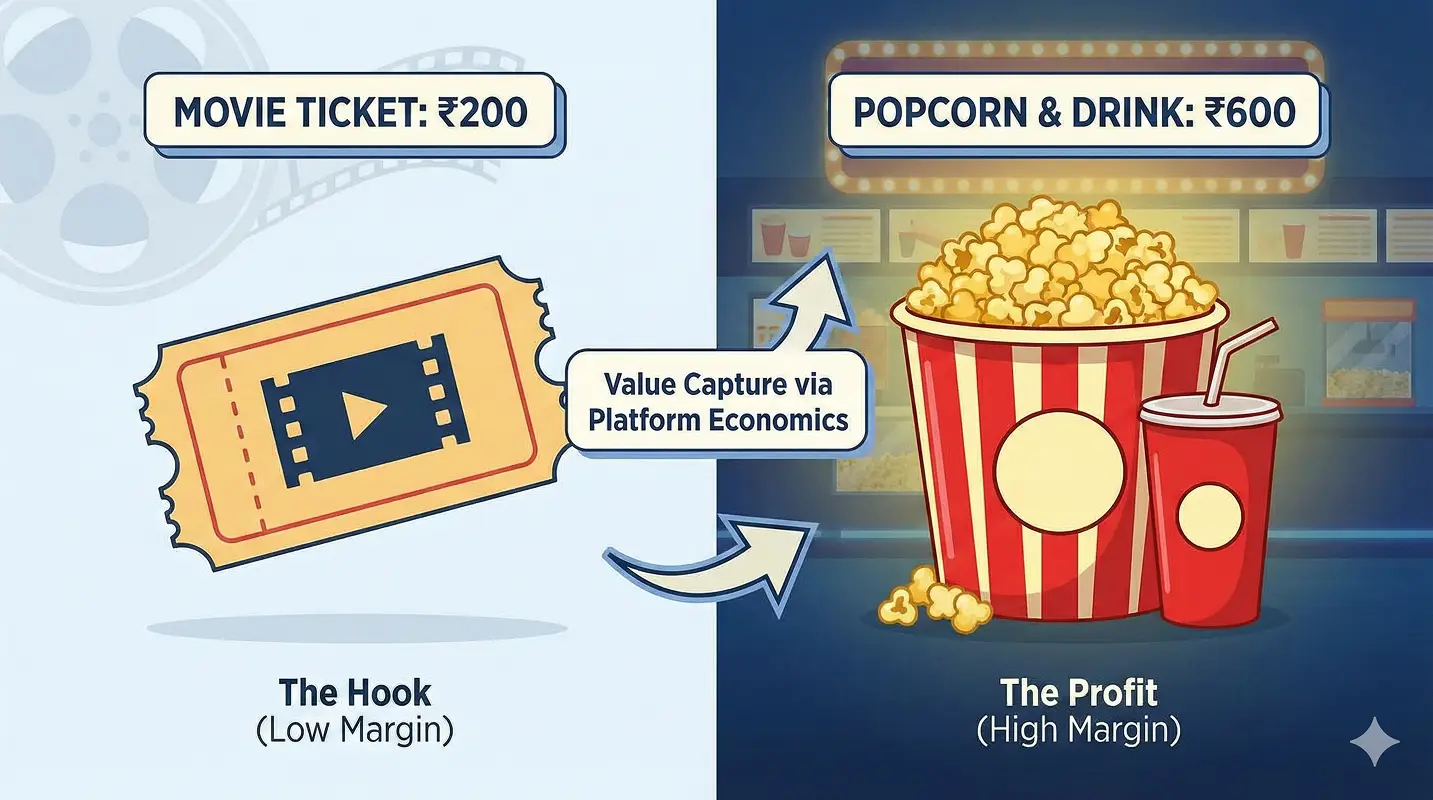
The Popcorn Economy: Why PVR & INOX Isn't Actually in the Movie Business

The User Frustration We have all been there. You walk into a PVR or INOX on a Tuesday. You are happy because you snagged a ticket for just ₹200. You walk to the concession stand, order a regular popcorn and a Pepsi, and the bill comes to ₹650. You feel cheated. You wonder, “How can puffed corn cost three times more than a multi-million dollar blockbuster movie?” As a consumer, it feels like price gouging. But as a Product Manager, if you look at the P&L (Profit and Loss) statement, you realize it’s actually a brilliant execution of Platform Economics. ...

November 22, 2025

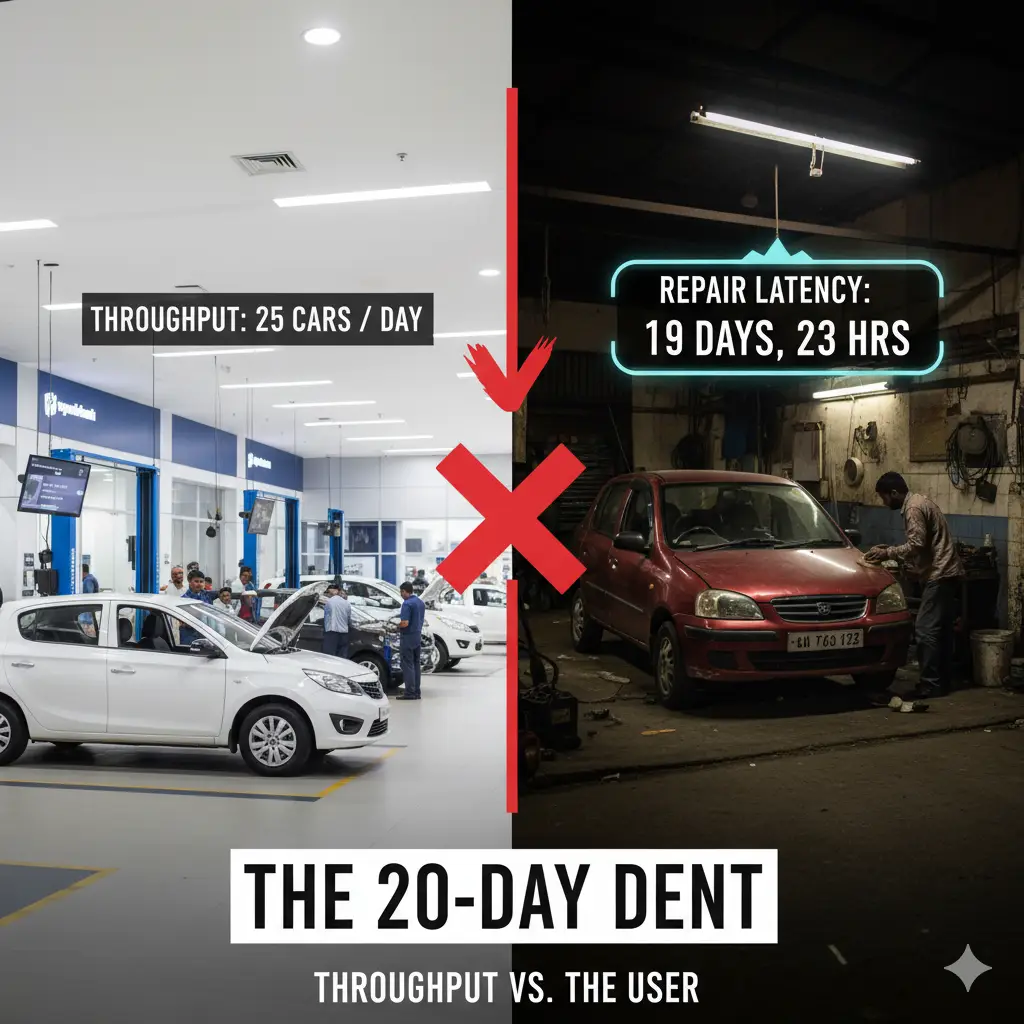
The "20-Day Dent": Why Dealerships are Designing for Throughput, Not Users

The Observation Last month, I walked into a premium car showroom to get a minor dent fixed. It was a two-hour job at best—a bit of panel beating and a touch of paint. The Service Advisor took one look and gave me an estimated delivery time of 20 days. I was baffled. I asked, “Why?” He gave me a vague answer about “parts availability” and “paint booth queue.” But when I looked around, I saw hundreds of cars zooming in and out of the service bay for their periodic maintenance—oil changes, filter checks, washing. They were entering at 10 AM and leaving by 4 PM. ...

November 19, 2025

The Spy's Briefing: A Simple Guide to AI's "Model Context Protocol"

The answer lies in a crucial concept: the context. And the system for managing that context is what we can call a Model Context Protocol (MCP). ​This isn’t a single official product, but a vital strategic framework. The goal here is to understand the what and the why—to see the architecture behind the magic. ​The Core Problem: An AI Has No Memory ​First, a fundamental truth: an AI model, by itself, has no long-term memory. It doesn’t “remember” your last conversation. ...

September 1, 2025

Don't Just Design It, Seduce It: Why UI Isn't Just Pretty Pictures

Ever heard a new designer proclaim, “I don’t want to do UI design, I just want the ’essence’ of UX design!”? It’s as if they imagine UX to be some mystical art of problem-solving and value creation, entirely separate from the pixel-perfect world of user interfaces. Well, hold onto your wireframes, because we’re about to debunk that myth with a dash of ancient wisdom and a sprinkle of modern design insights. ...

July 19, 2025

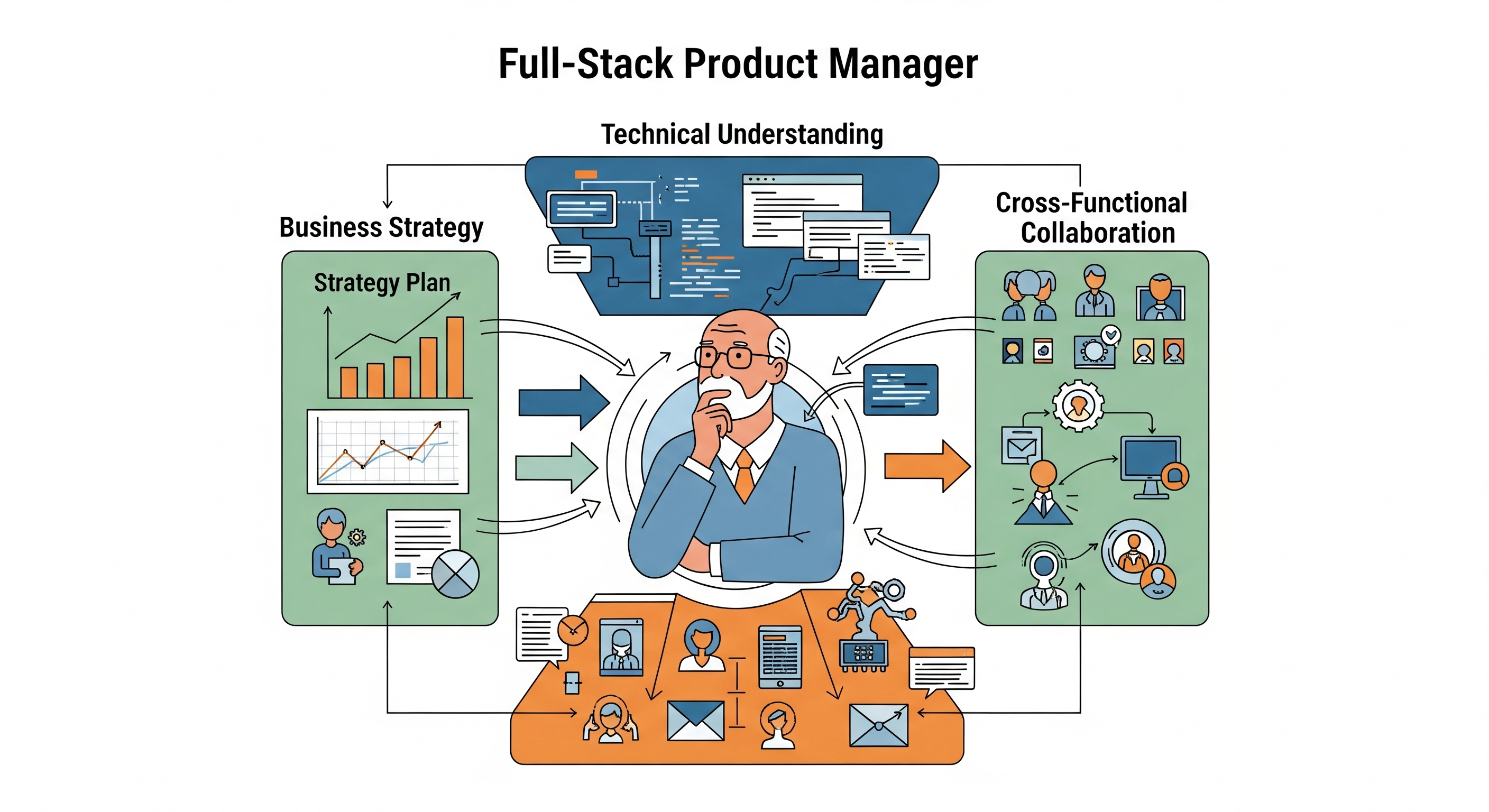
The Full-Stack PM: Beyond Features to Business Impact

The traditional PM, focused heavily on user stories and sprint backlogs, is no longer sufficient. Today’s market demands product leaders who can seamlessly bridge the gap between technical execution and overarching business objectives, ensuring every product decision contributes directly to the company’s bottom line. Pillar 1: Strategic Acumen & Business Leadership A true full-stack PM doesn’t just build products; they build businesses through products. This requires a profound shift in mindset from simply managing outputs to driving tangible outcomes. ...

June 19, 2025

Agile ≠ Agile? – How Scrum Might Be Hurting Product Management

When Agile was first introduced, it was a breath of fresh air. It promised to replace bloated waterfall processes with fast, iterative cycles and customer-focused collaboration. Who wouldn’t want that? But somewhere between the manifesto and the latest PI planning session, something went terribly wrong. Today, what many companies call “Agile” looks less like agility and more like ritualized chaos. Daily stand-ups that solve nothing. Sprints filled with mini-waterfall work. Backlogs overflowing with micro-tasks that no one outside the team understands—or cares about. ...

June 1, 2025

The Framework Fallacy: Why Product Managers Must Think Beyond RICE & SAFe

Frameworks: The Safety Blanket for PM Anxiety Let’s be honest — frameworks are comforting. They promise a way to reduce ambiguity, provide structure, and help you sound very smart in meetings. “Why did we drop that feature?” “Well, it only scored a 4.2 on the ICE matrix, while the AI-powered toast detector scored 7.8.” Ah, the sweet sound of rationalization wrapped in numbers no one fully understands. But here’s the thing: frameworks can disguise indecision just as easily as they can clarify it. When you’re unsure about your vision, slapping a matrix on the wall won’t help. It’s like using a ruler to measure the smell of a burning house — methodical, but completely missing the point. ...

May 23, 2025

Should AI Pay Human Creators? The Debate Shaping Hollywood

As artificial intelligence continues to revolutionize industries worldwide, Hollywood has become one of its most intriguing battlegrounds. AI is enhancing visual effects, generating scripts, and even recreating actors digitally. The efficiency and creativity it brings are undeniable, but it also raises a critical question: Should AI-generated content pay the human creators whose work it learns from? Actor Joseph Gordon-Levitt recently voiced his thoughts, stating that “AI uses human data to train itself—creators should be paid when AI generates content based on their work.” His statement has sparked heated debates in the entertainment industry. At the core of the discussion is the human side of creativity. After all, AI’s abilities are built on the very foundation of human-made art, performances, and stories. ...

October 14, 2024

Prioritize Like a Pro: Mastering Your Product Roadmap

A well-defined product roadmap acts as your guiding light, outlining the features you plan to build and the order in which you’ll develop them. But before you can map the path, you need to prioritize the destinations. Here’s where prioritization frameworks come in – structured methods that help you objectively evaluate backlog items and make informed decisions about what to build first. Popular prioritization frameworks that I use are: Value vs. Effort Matrix: This simple yet powerful tool is a great starting point. It visually depicts features on a grid based on their perceived value (impact on users and business) and the effort required to develop them. Features in the high-value, low-effort quadrant are ideal candidates for early development, while those requiring high effort but offering low perceived value might need further justification or even removal. ...

June 4, 2024